Green Tara is regarded as a fully enlightened female Buddha and a protector from the eight fears. She is one of the central figures of Himalayan iconography.
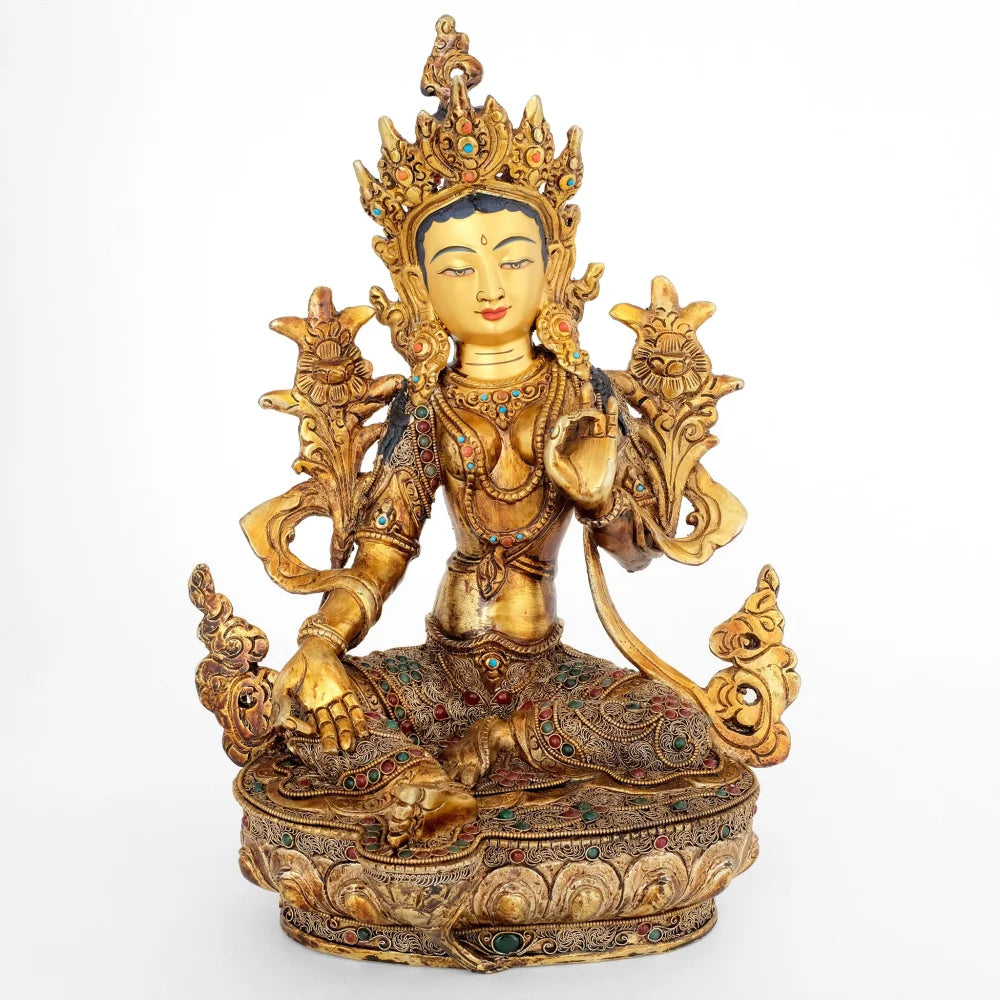
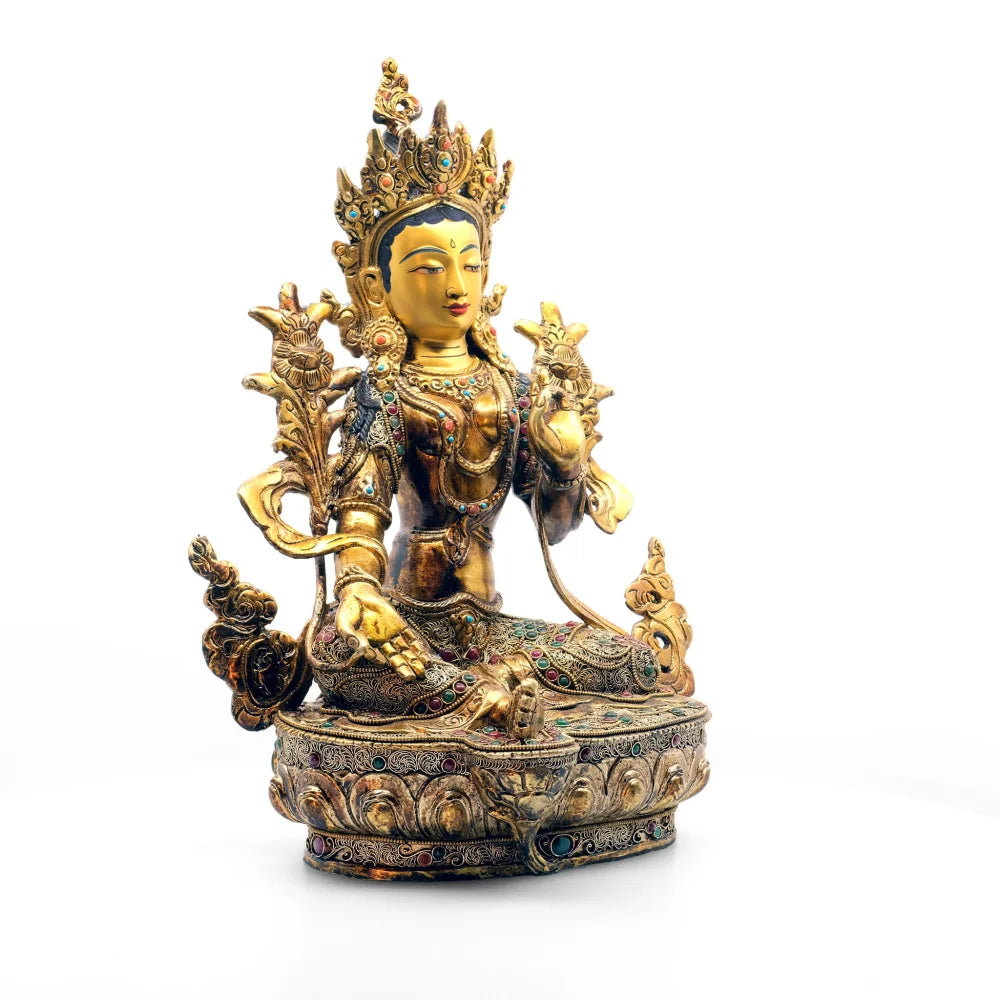
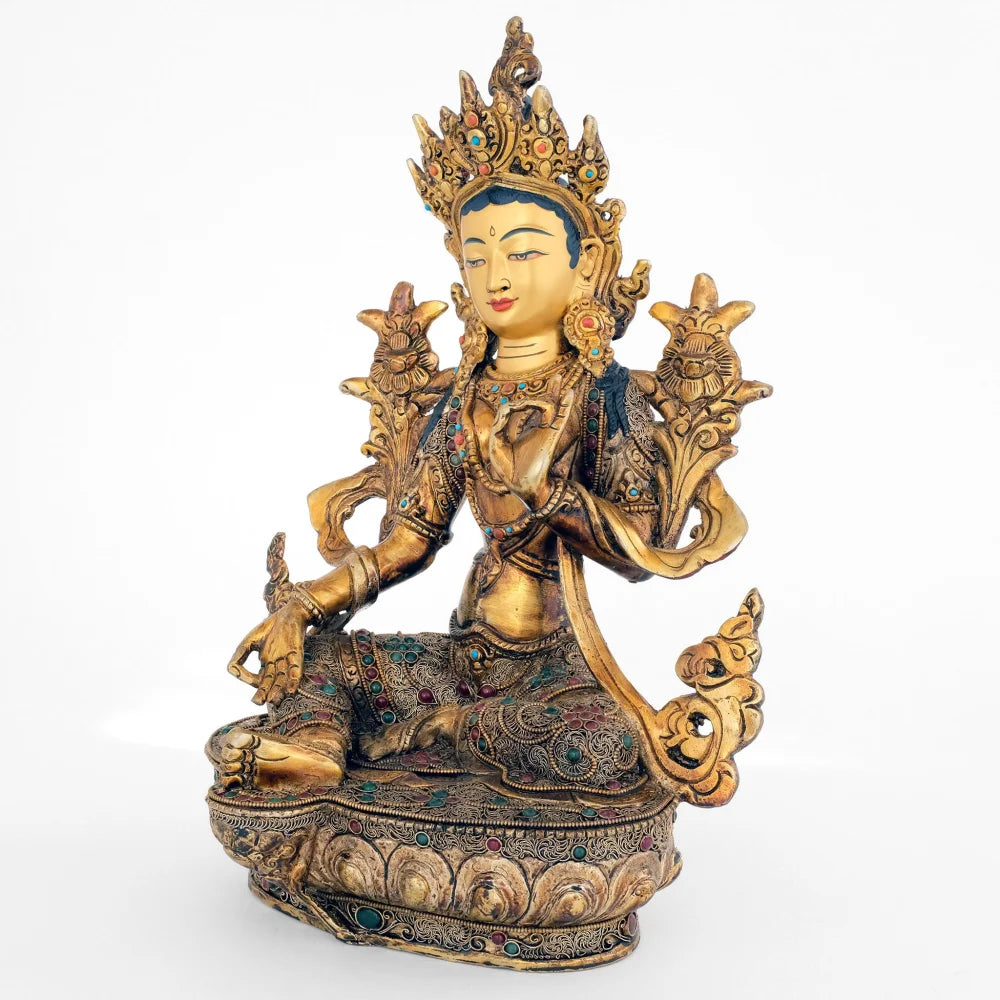
The statue depicts Tara seated in lalit asana on a lotus base. Her right hand rests on her knee in the gesture of generosity (varada mudra), the palm turned slightly outward. The left hand forms the vitarka mudra, the gesture of teaching, while holding the stem of the utpala lotus. Two fully opened lotus blossoms rise beside her shoulders, a characteristic feature of Green Tara’s iconography. She wears the crown and full ornaments of a Bodhisattva.
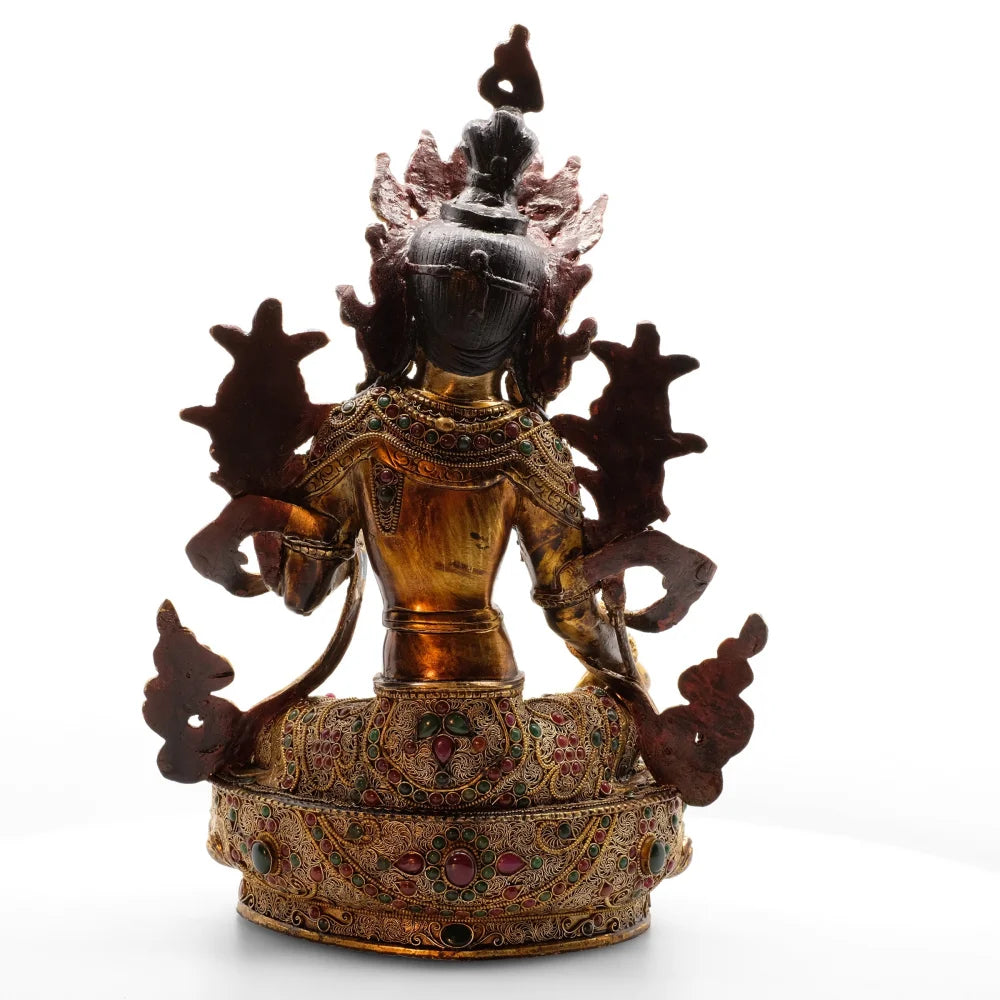
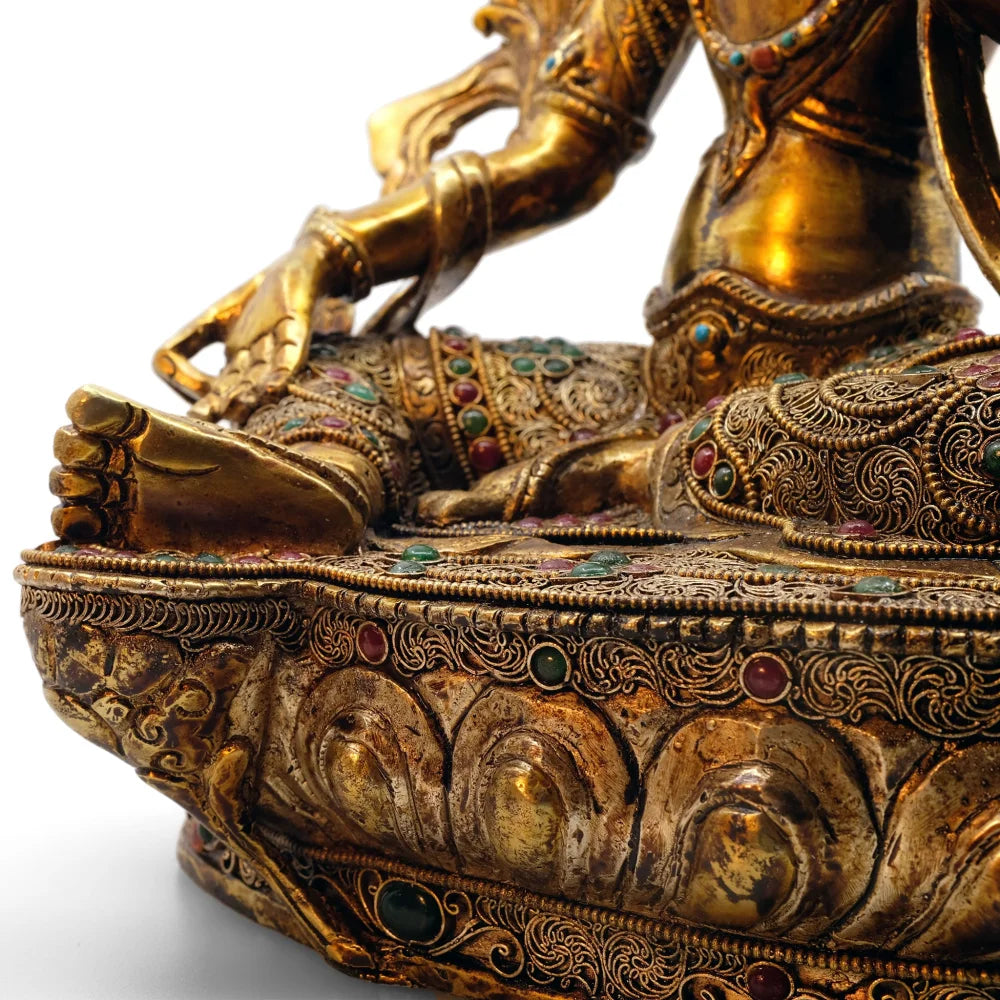
The robe and lotus base are adorned with fine filigree work. Spiral and curved elements are formed from thin wires, filled with small arched segments, and arranged into floral motifs. Colored stones provide accents within the ornamentation. Silver- and gold-plated surfaces add subtle highlights, while the patination enhances the structure of the filigree and gives depth to the surface. Filigree is a traditional and time-intensive technique that remains alive in Nepalese metalwork.
Tara’s expression is calm and gentle. The slight inclination of the head and the clear proportions give the figure a composed, attentive presence, characteristic of Green Tara representations in Nepal.
This statue was created in Patan within the Newar tradition of metal sculpture.
Green Tara
Statue made of copper, cast using the traditional lost-wax casting, adorned with fine filigree ornaments, gold- and silver-plated, accentuated with colored stones. Patinated for an antique finish. The face is set in gold. Handmade in Nepal.
- Height: 33 cm
- Width: 22 cm
- Depth: 17 cm
- Weight: 3260 g
NOTE
The facial painting is a cold gold application and water-soluble.