The vajra is a central ritual object of Vajrayana Buddhism. It represents clarity and steadfastness and is iconographically associated with the lotus.
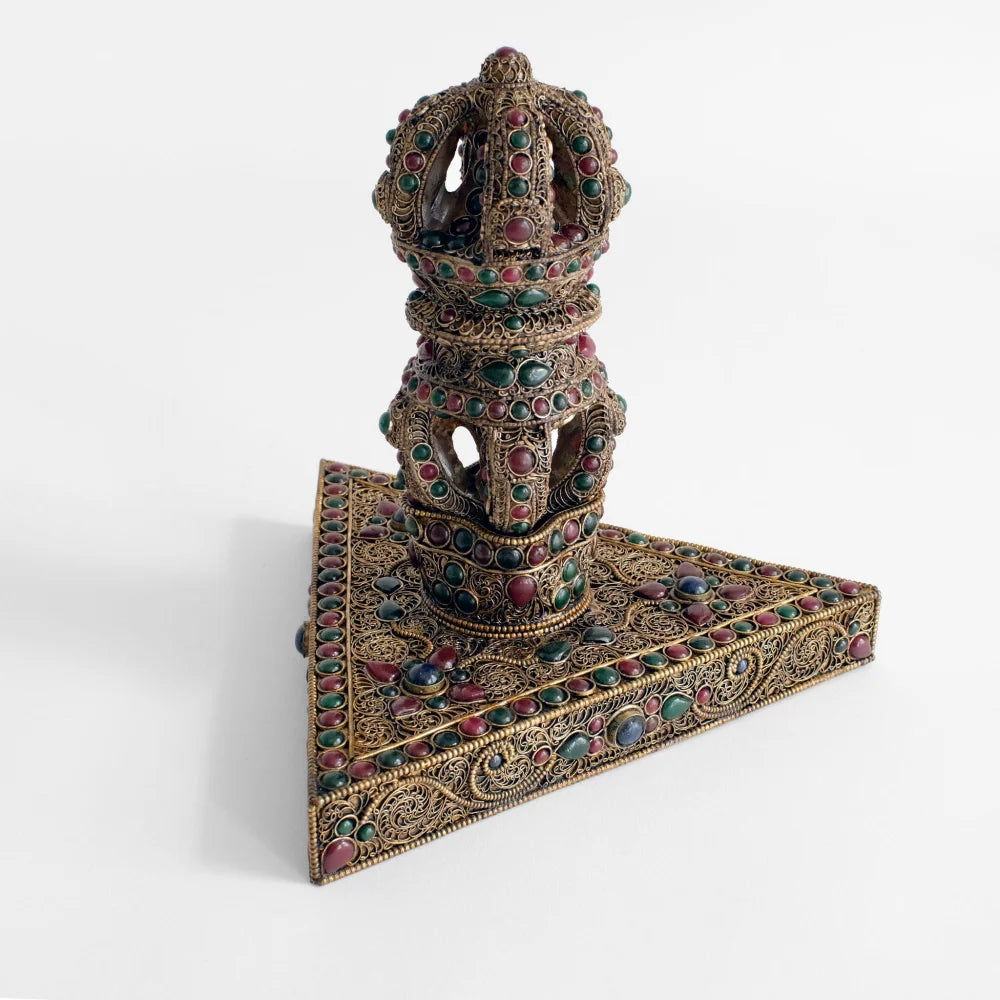
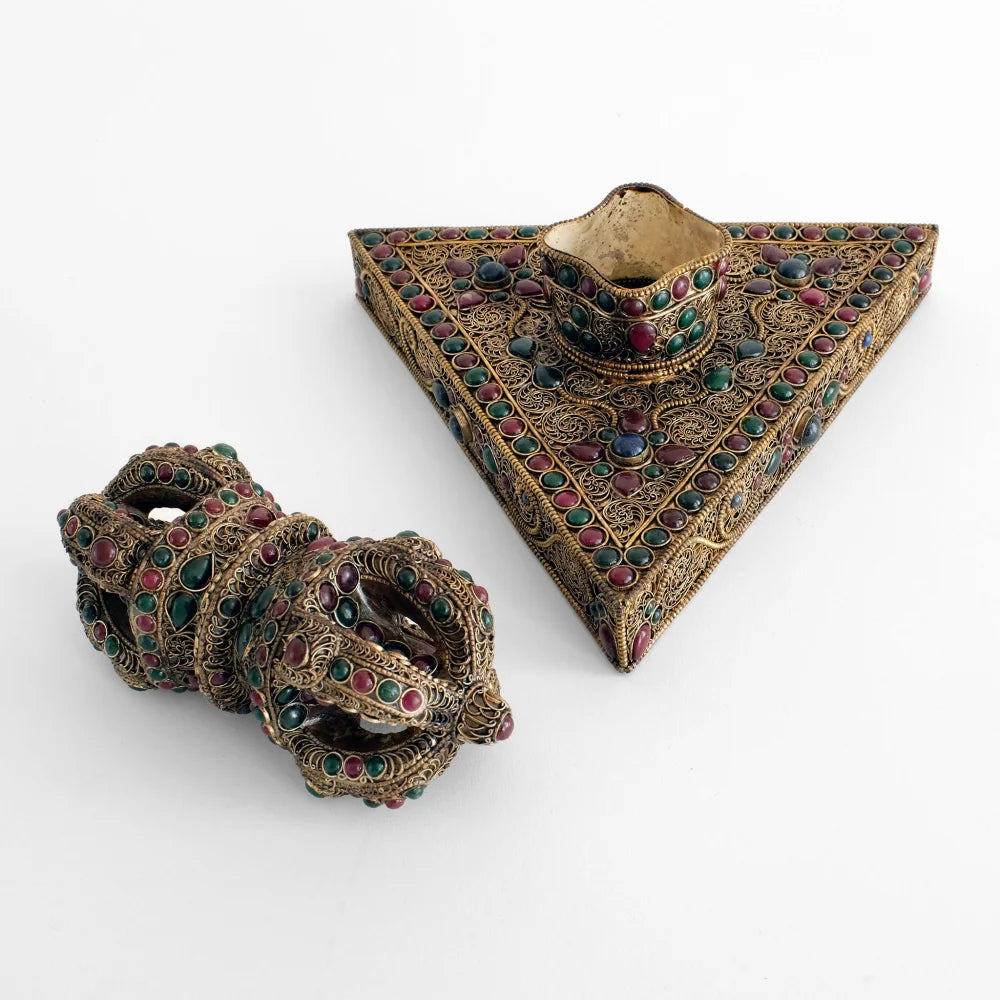
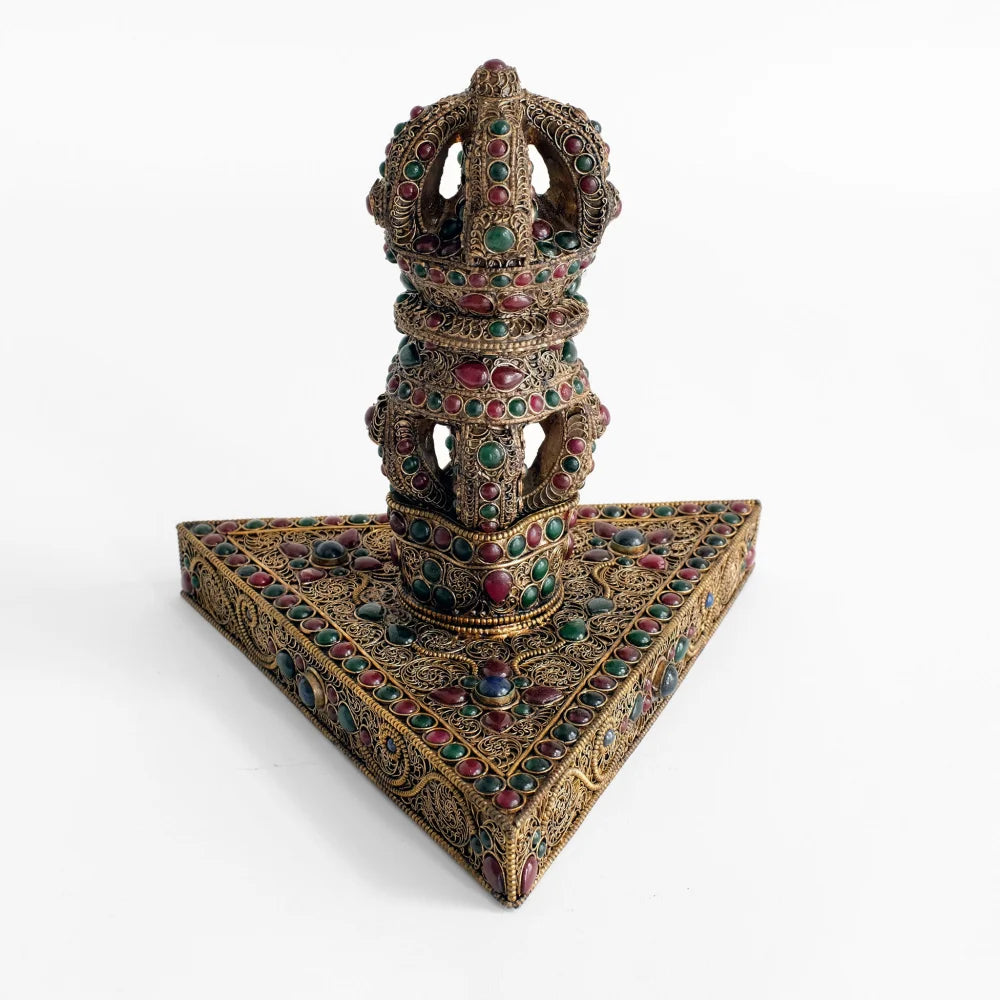
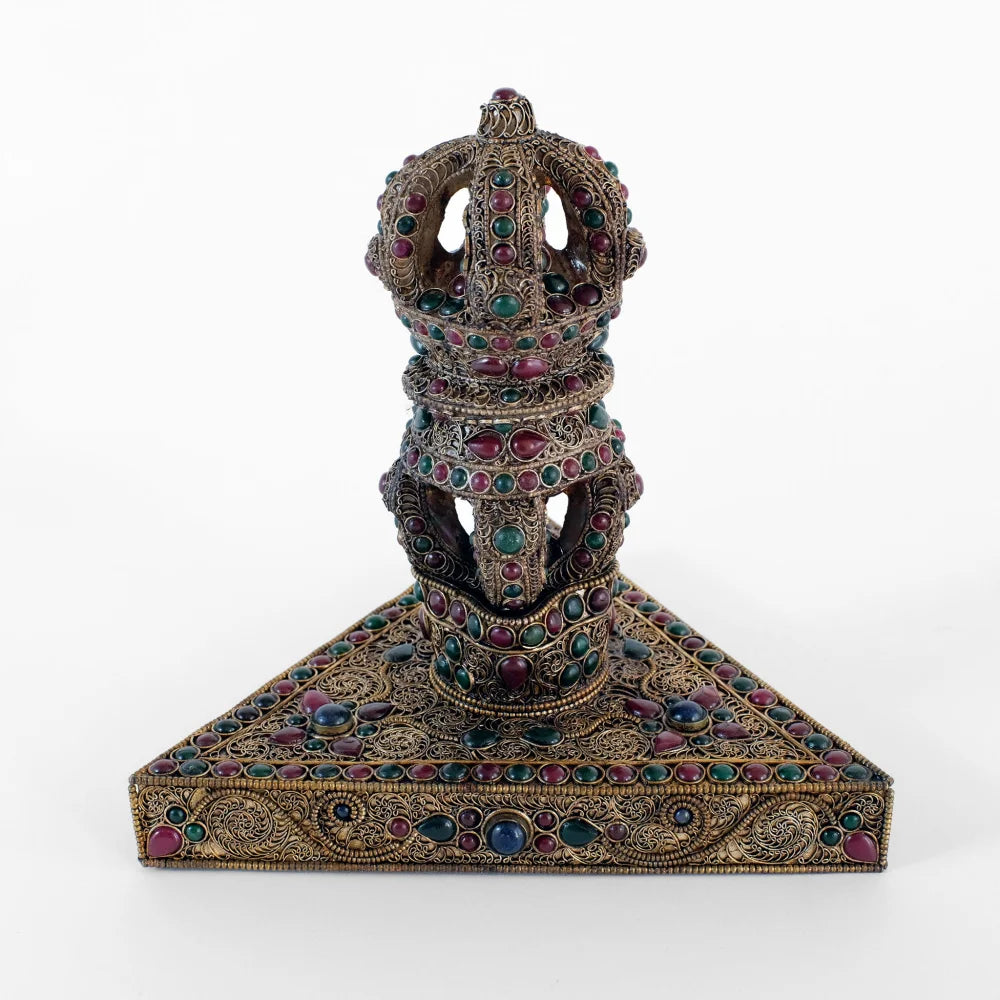
It is a five-pointed vajra, the most commonly used form in Vajrayana Buddhism, with a central axis and four outer prongs. From a rounded central element, the curved prongs extend outward and are closed.
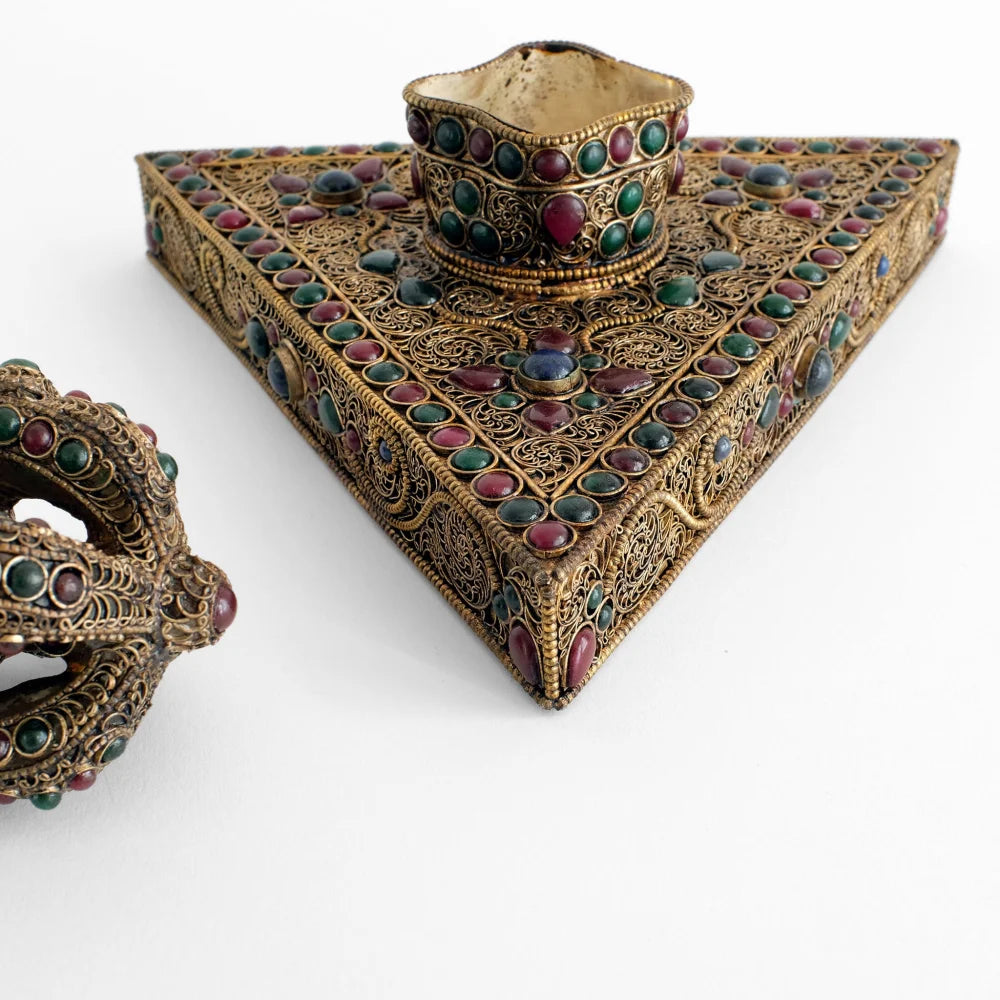
The vajra is made of crystal and decorated with fine filigree work. Small curved wire elements are assembled into continuous patterns and surround the central middle section in a ring-like arrangement. To the right and left of this, colored stones are set in band-like rings and are likewise arranged concentrically.
The vajra stands upright on a triangular copper stand. The stand is worked with fine filigree decoration. Spiral forms filled with small curved wire elements structure the upper and side surfaces and are complemented by colored stones set in abstracted vajra motifs. The triangular base of the stand forms the formal framework for the upright vajra.
In form and structure, the vajra follows the established tradition of Buddhist art. The clear alignment along the central axis and the balanced articulation of its elements define its appearance.
Vajra, Dorje
Crystal body, copper stand, decorated with filigree, silver-plated, set with colored stones. The object is patinated. Handcrafted in Nepal.
- Height: 7" / 18 cm
- Width: 7" / 18 cm
- Depth: 7" / 18 cm
- Weight: 706 g