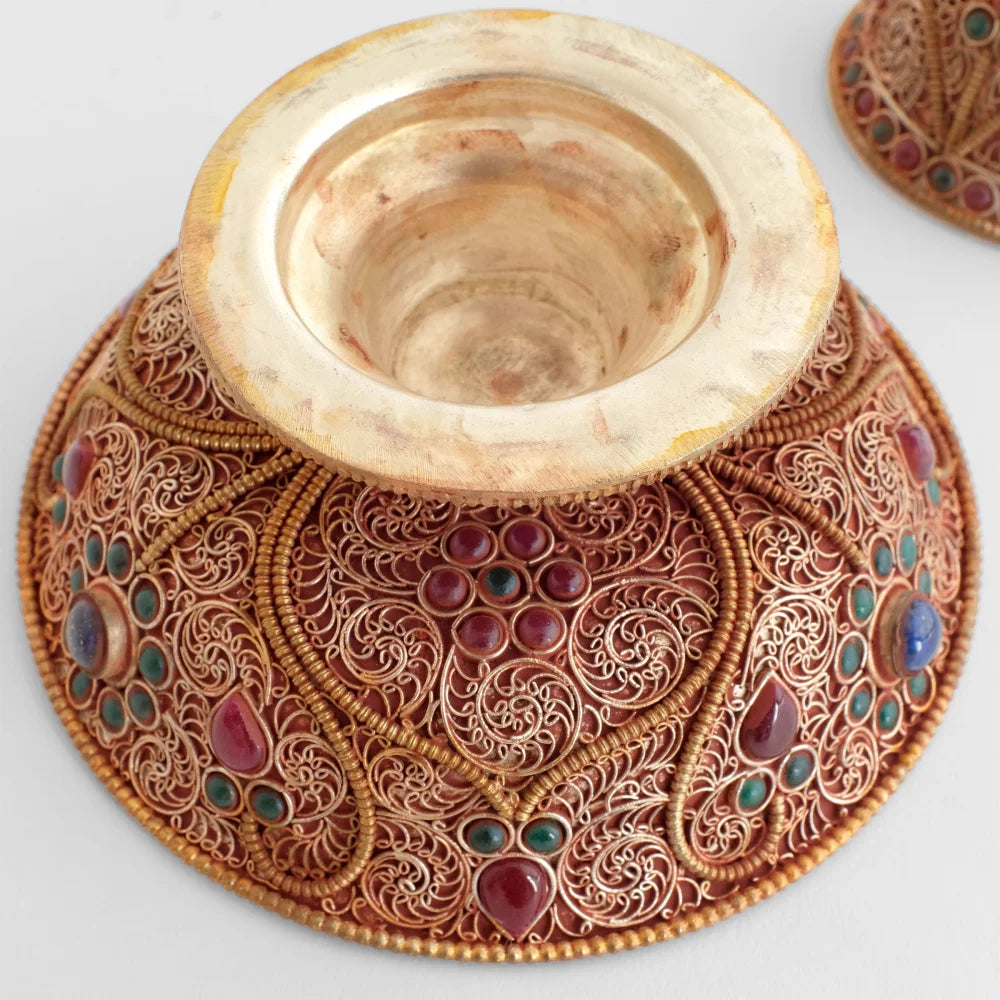
The serkyem is a ritual vessel used in Buddhist practice of the Himalayan region. It is employed in the context of Dharmapala rituals and forms part of the furnishings of monastic and household altars.
The term serkyem means “golden drink” and refers to the ritual purpose of the vessel. Serkyem vessels are used for the offering to the Dharma protectors (dharmapala). Traditionally, they are filled with tea; in certain practice lineages, alcoholic liquids are also used, together with uncooked grains. These represent the five types of grain understood within the ritual order as offerings associated with sustenance.
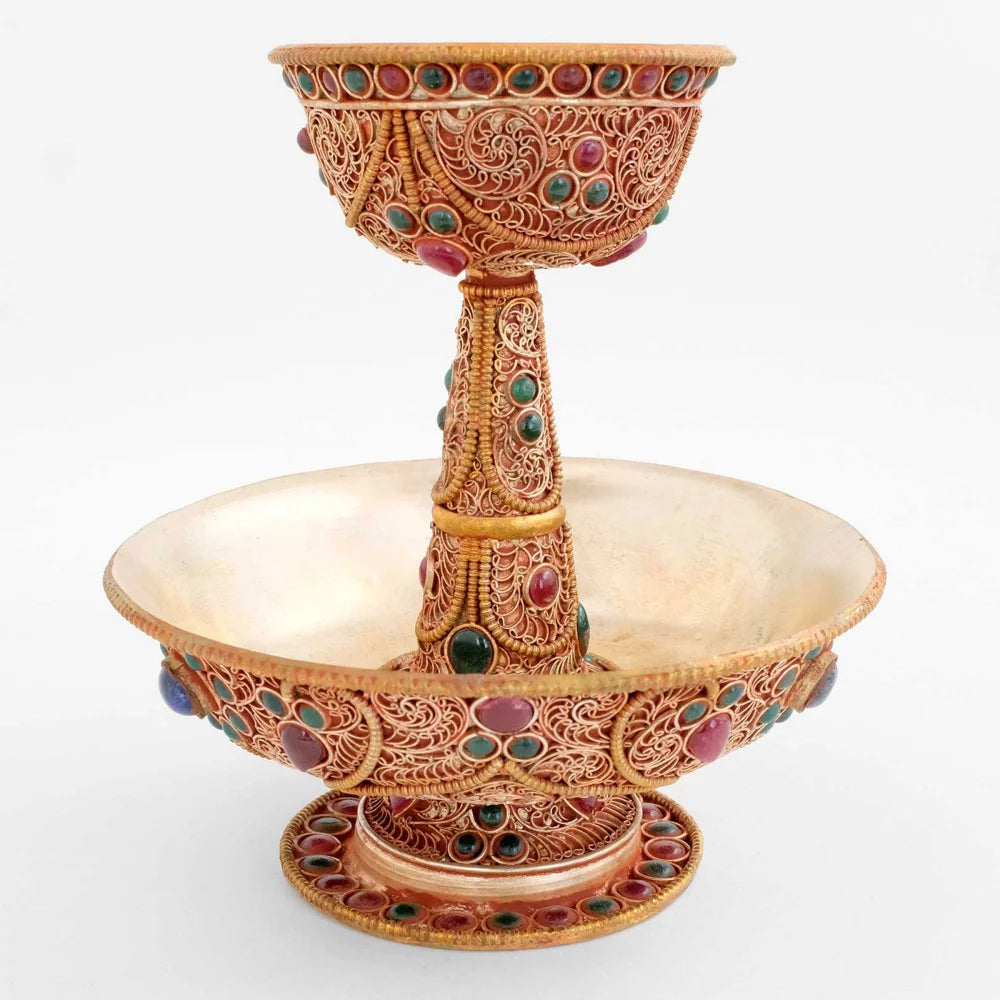
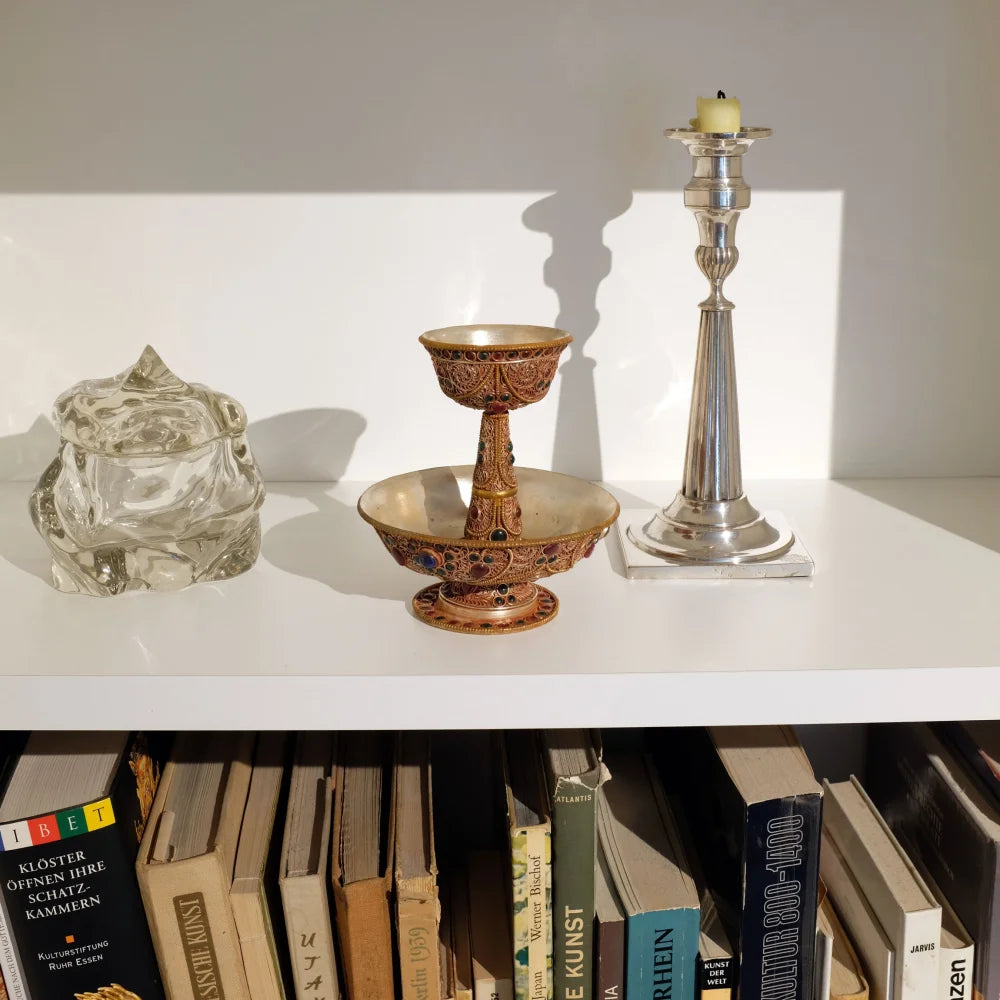
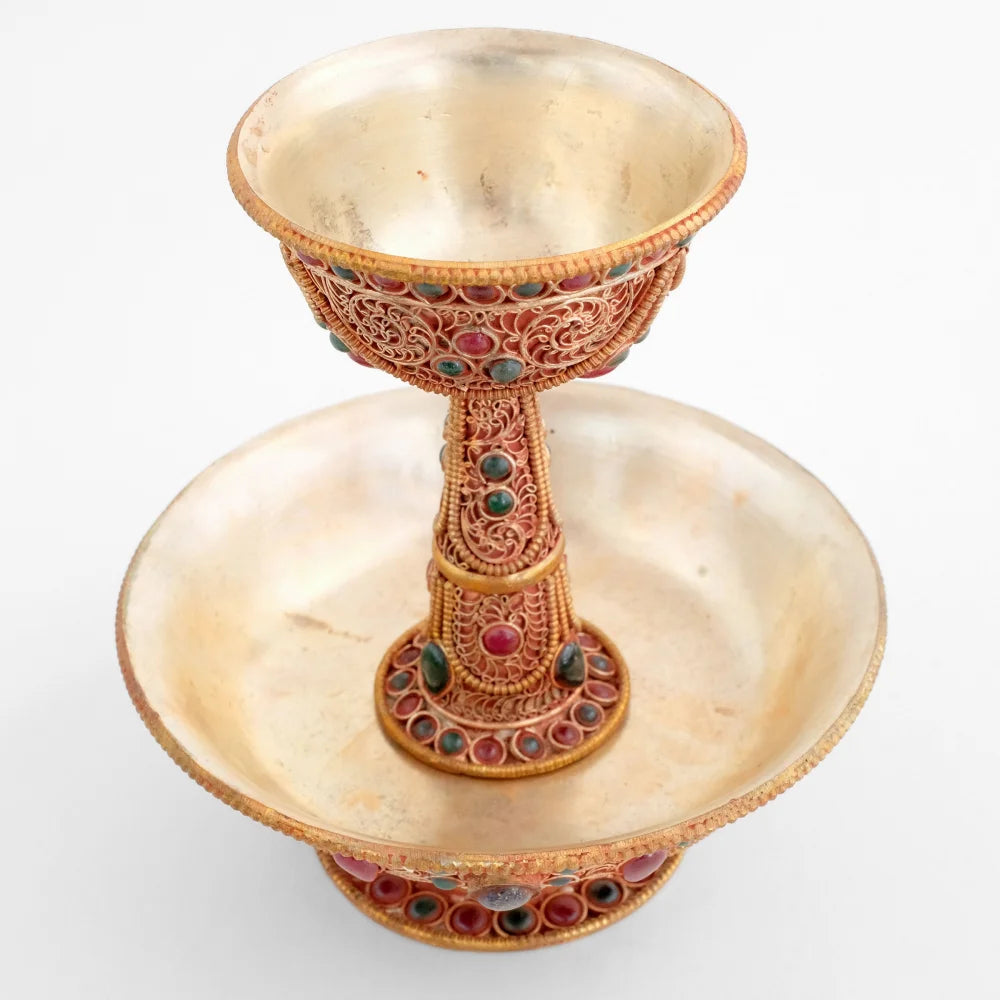
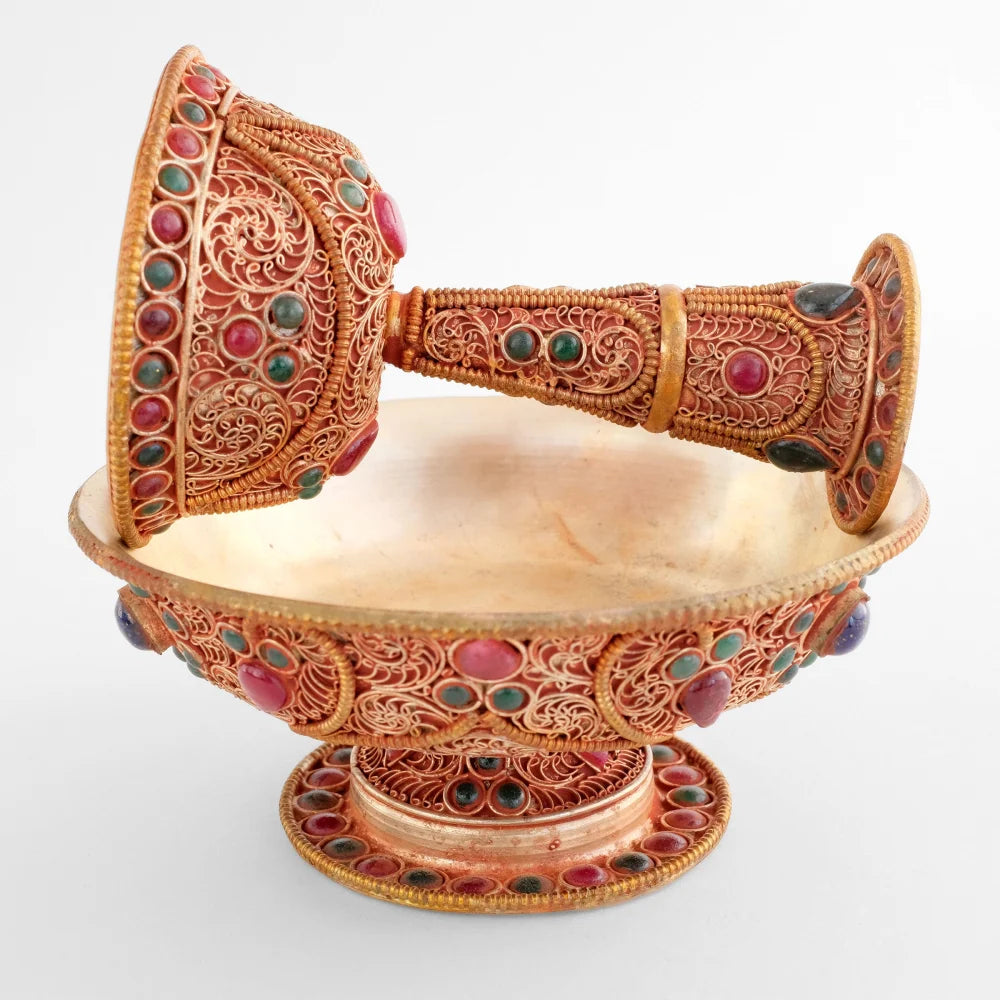
A serkyem consists of two separate vessels: a larger lower bowl and a smaller upper bowl.
The bowls are decorated with filigree. Fine wires are shaped into spiral forms, filled with small arched elements, and assembled into continuous ornaments. Colored stones are set into the filigree structure, forming floral motifs.
The serkyem combines a clearly defined ritual function with ornamental articulation in filigree technique and reflects the craft tradition of metal ritual vessels from the Himalayan region.
Serkyem
Set of 2 vessels, copper, decorated with filigree, silver-plated and set with colored stones. Finished with red cinnabar powder. Handmade in Nepal.
Height: 13.5 cm
Diameter: 12 cm
Weight: 332 g