The vajra is a central symbol in the iconography of Vajrayana Buddhism. It represents clarity of mind and steadfastness and is frequently associated with the lotus in Buddhist art.
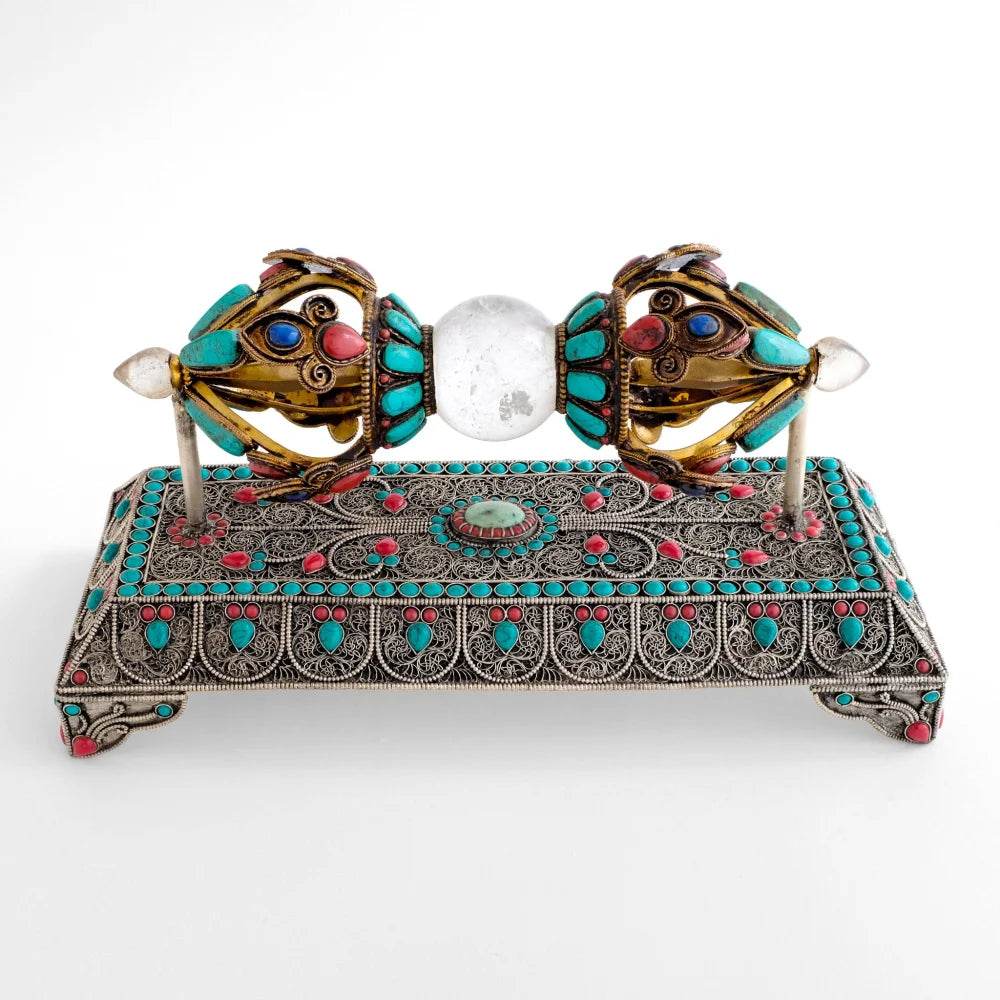
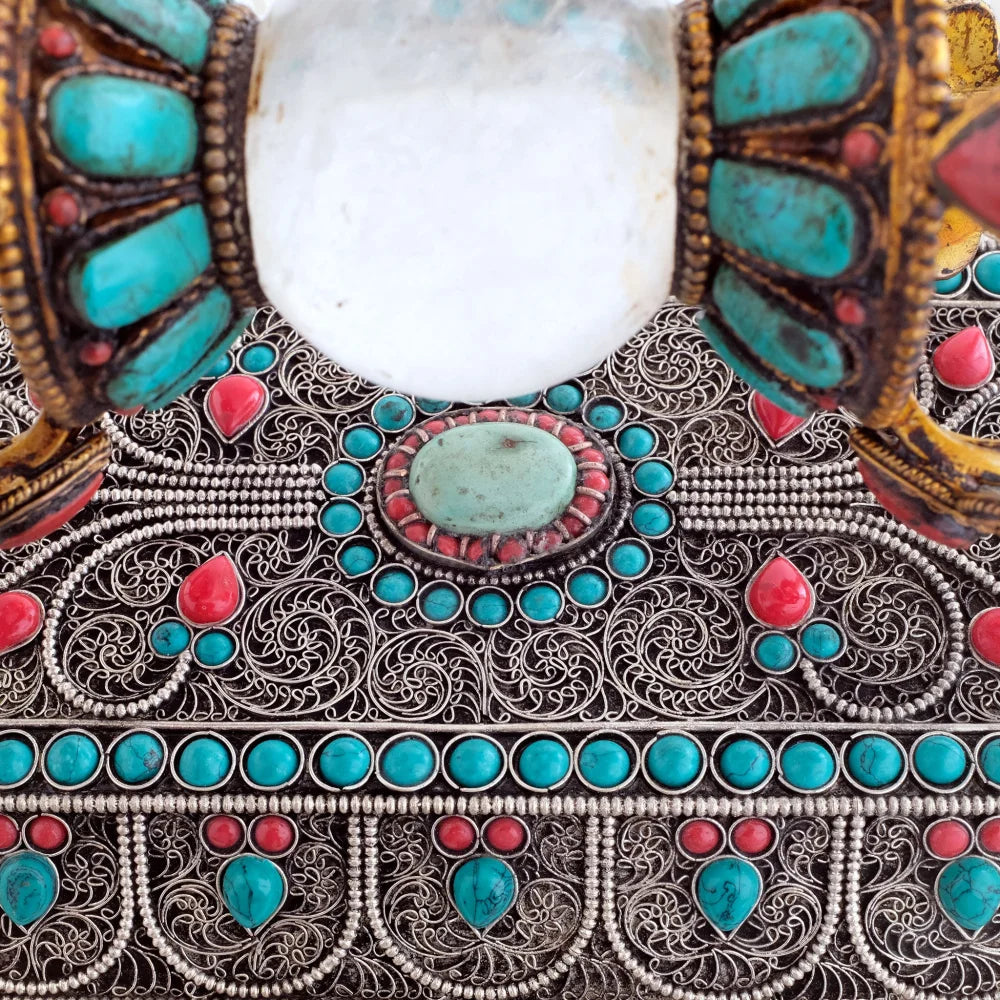
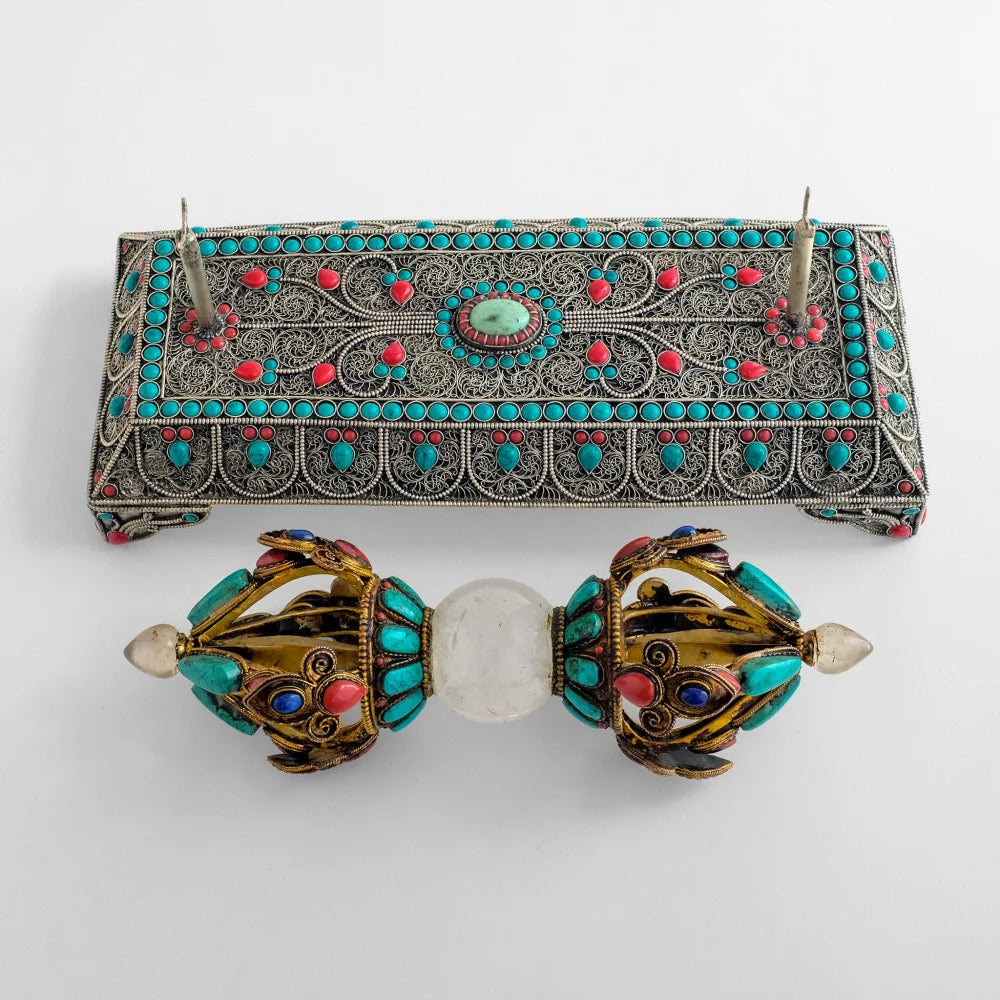
It is a five-pointed vajra, the most commonly used form in Vajrayana Buddhism, with four outer prongs. At the center is a crystal sphere. The curved vajra prongs are made of copper, gilded, and set with colored stones. At the outer ends, they terminate in drop-shaped crystal elements.
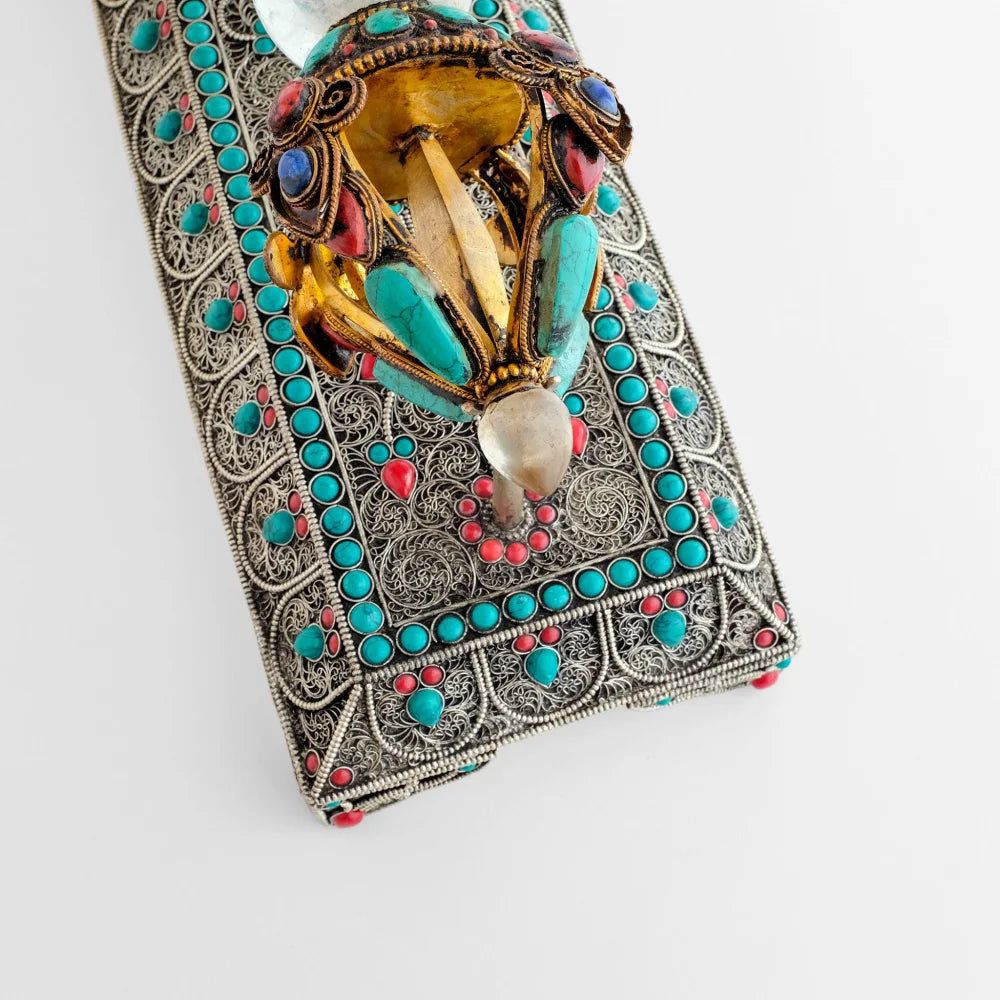
The vajra lies on a rectangular stand and is held horizontally above the base by two simple supports at either end.
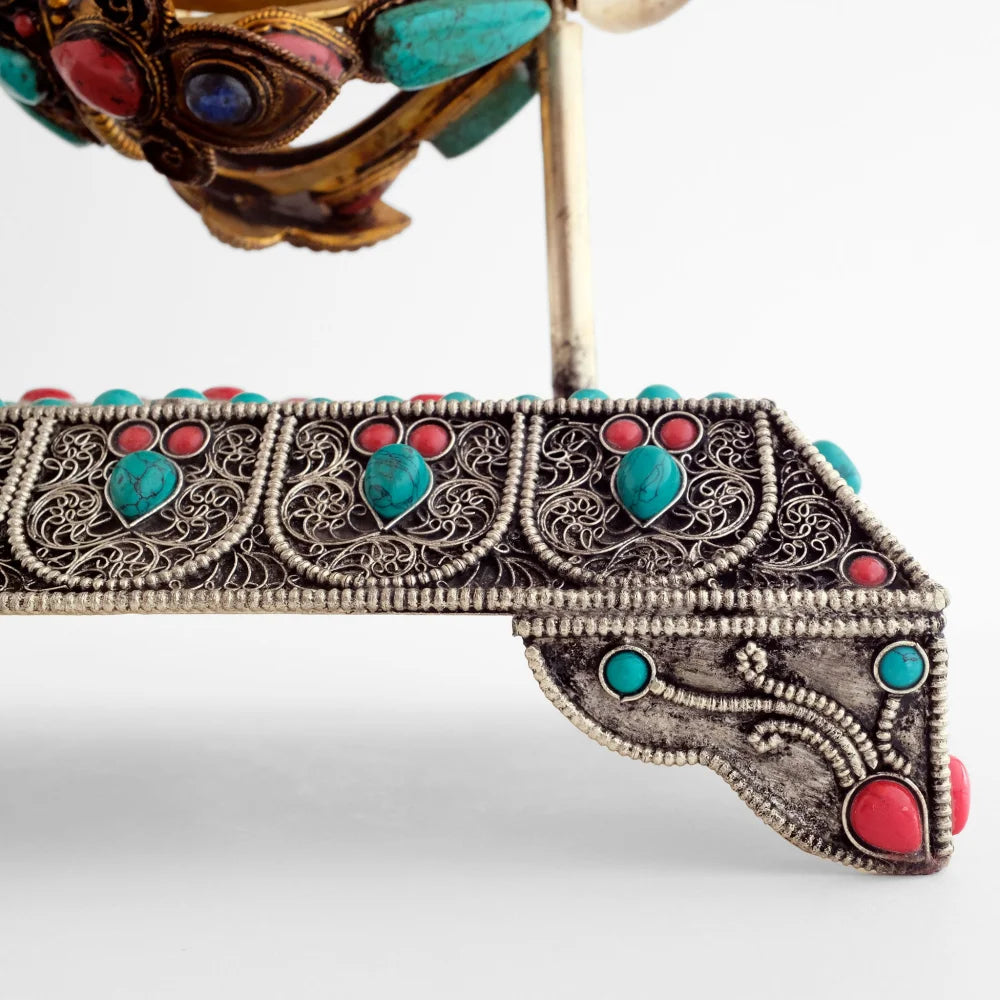
The stand is worked with filigree decoration. Fine wires are bent into spiral forms, filled with small curved wire elements, and combined into continuous patterns. Floral motifs unfold around a central rosette. The edge is bordered with a row of lotus leaves.
Crafted in Patan, Nepal, this object stands in the tradition of Himalayan Buddhist filigree and metalwork.
Vajra, Dorje
of copper and crystal, copper stand, decorated with filigree, silver- and gold-plated, set with colored stones. The object is patinated. Handcrafted in Nepal.
- Height: 15 cm / 6"
- Width: 29 cm / 11.5"
- Depth: 12 cm / 4.5"
- Weight: 1.082 g