Jambhala is a central deity in Buddhist iconography and is regarded as the guardian of earthly treasures. In Vajrayana art, he appears as a protective deity associated with prosperity, often in connection with merchants and trade.
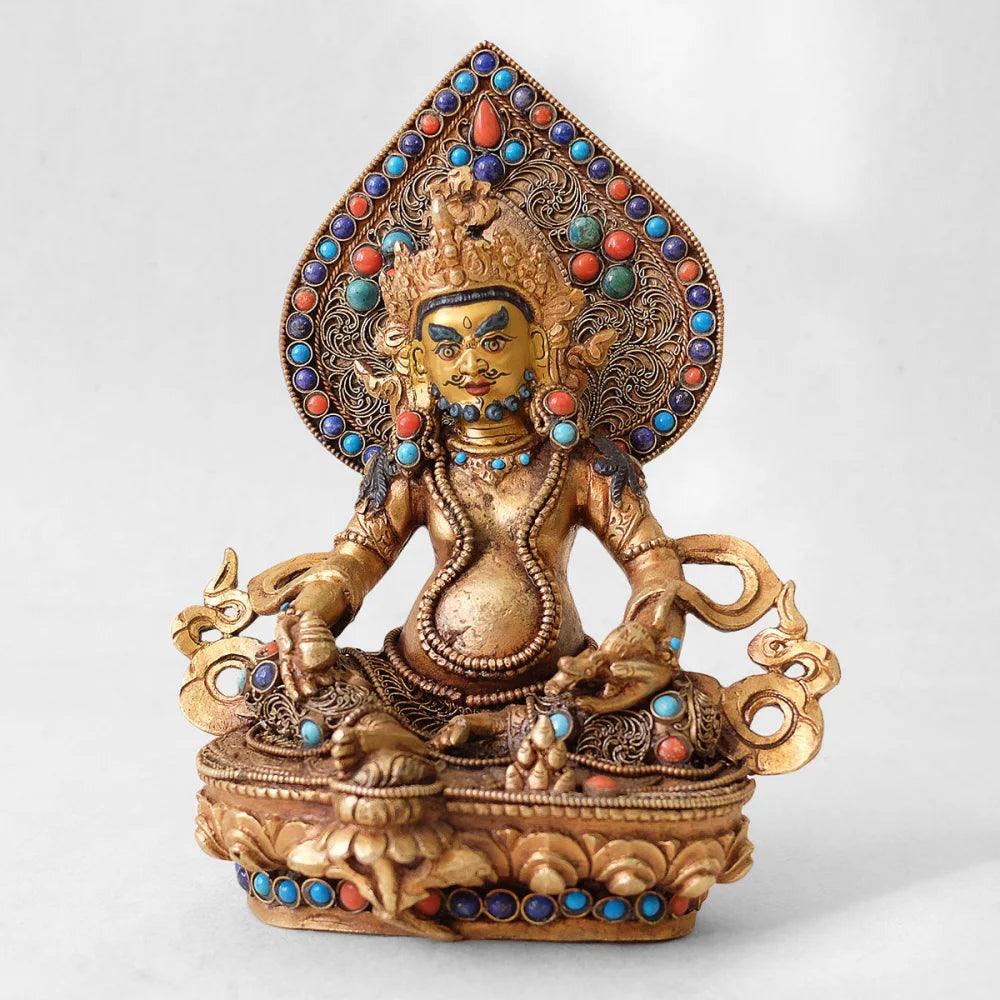
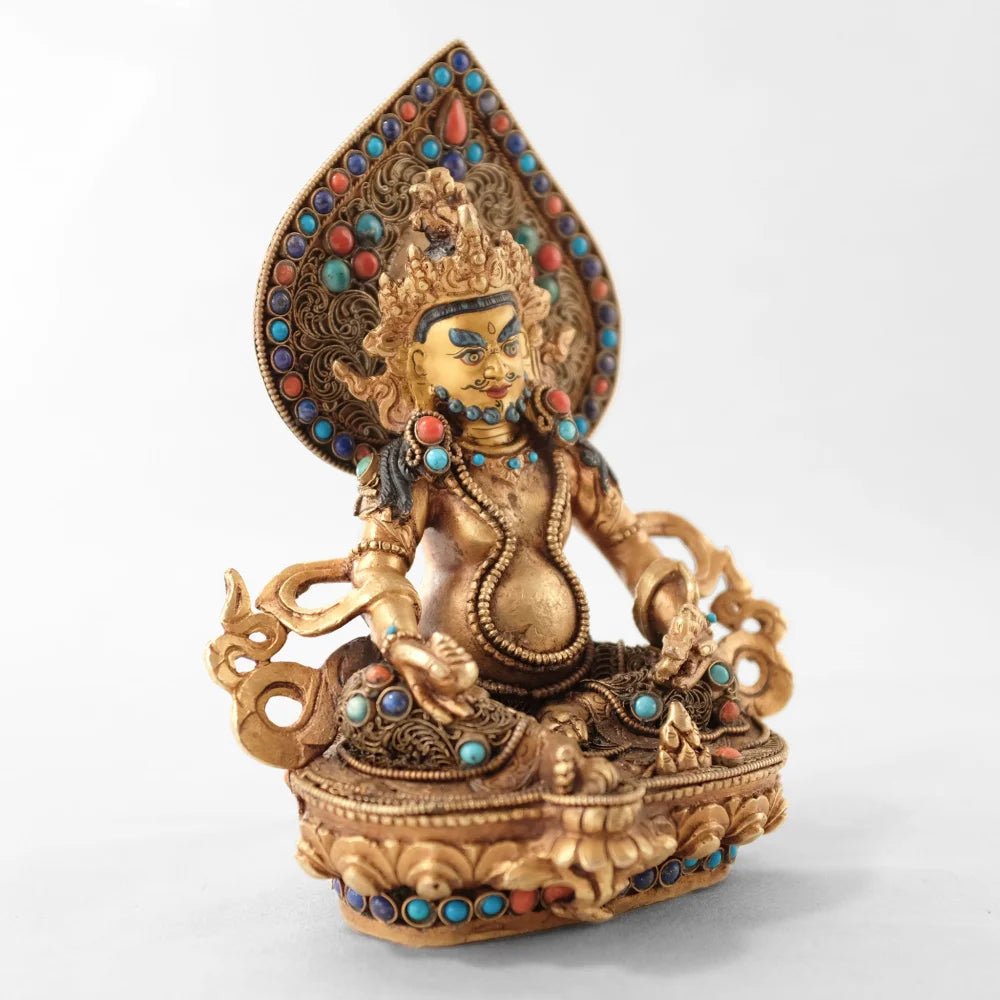
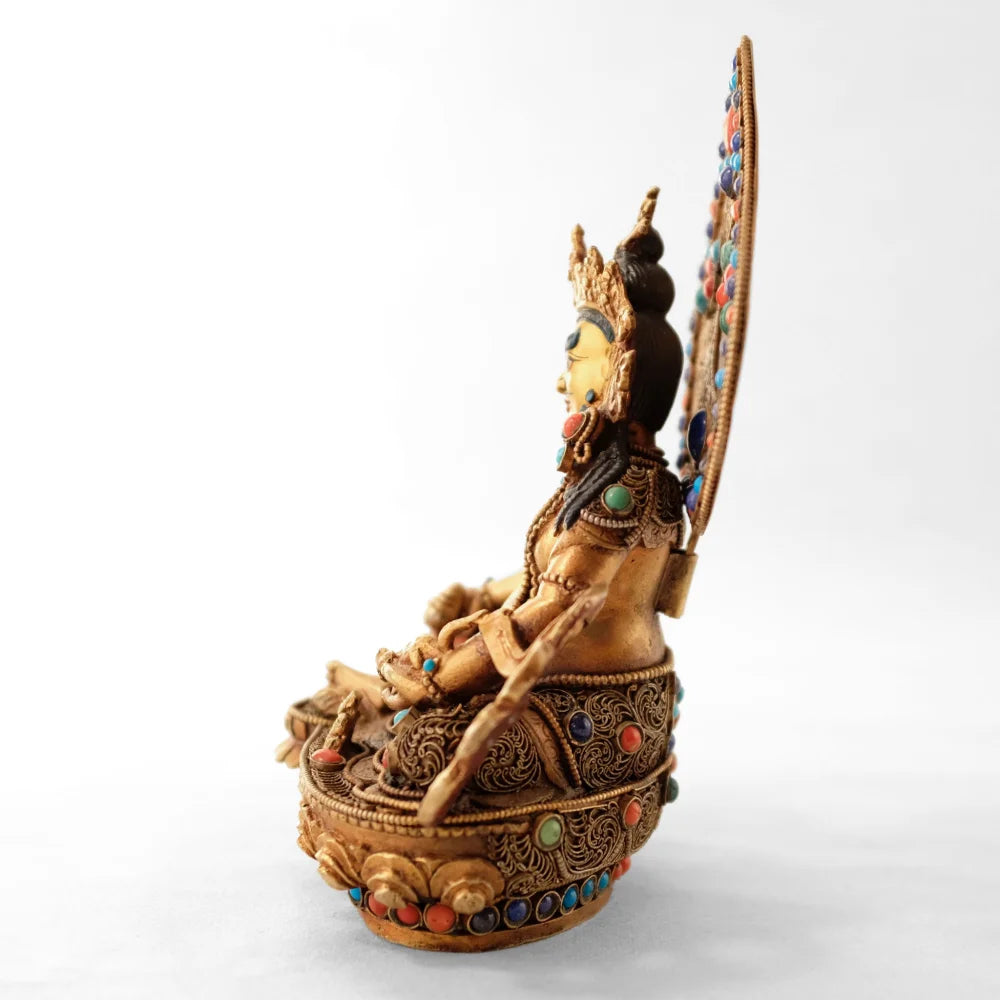
The statue depicts Jambhala seated in lalita asana on a lotus pedestal. His left leg is bent, while the right leg is slightly extended forward; the right foot rests on a small lotus. Jambhala’s foot sole touches a conch shell. The pronounced belly is an iconographic feature that signifies abundance and prosperity.
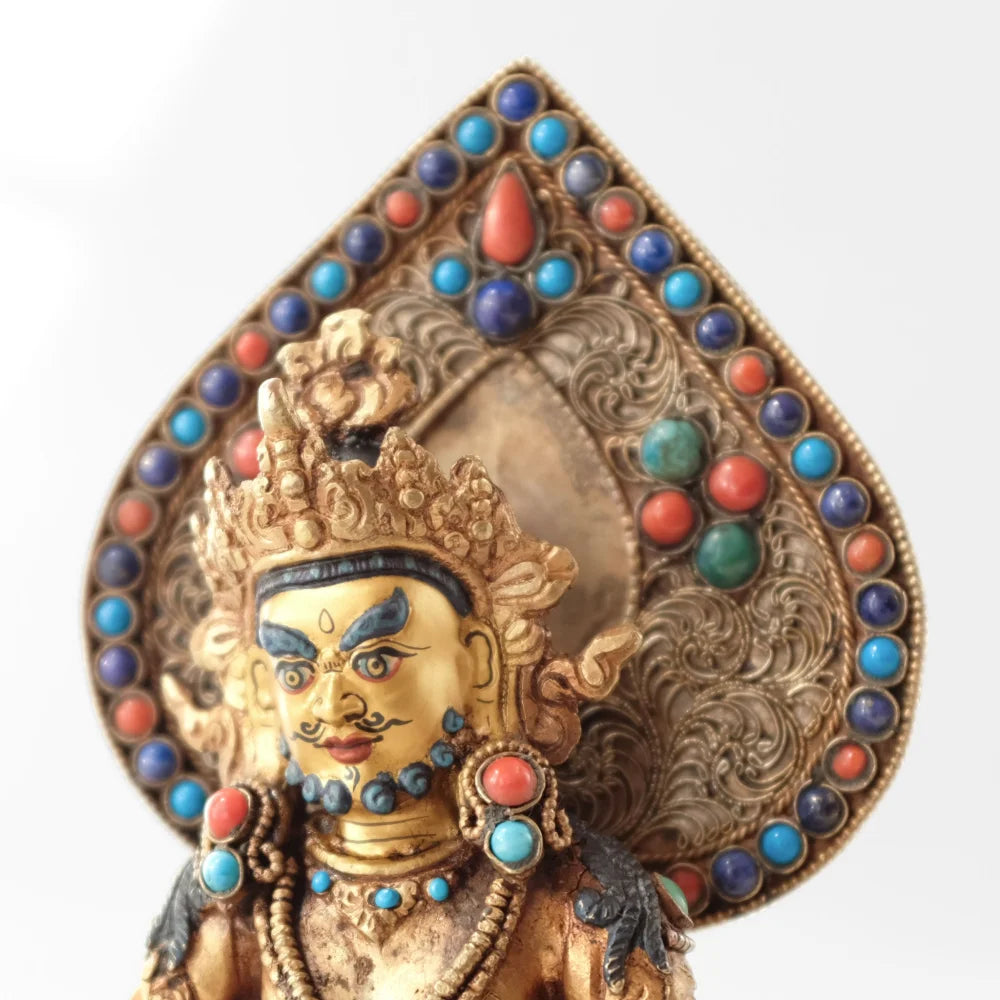
In his right hand, Jambhala holds the jambhara, a citrus fruit. In his left hand, he holds a mongoose (nakula) that spits jewels. A teardrop-shaped aureole rises behind his head. Jambhala wears the crown and the full ornaments of a bodhisattva.
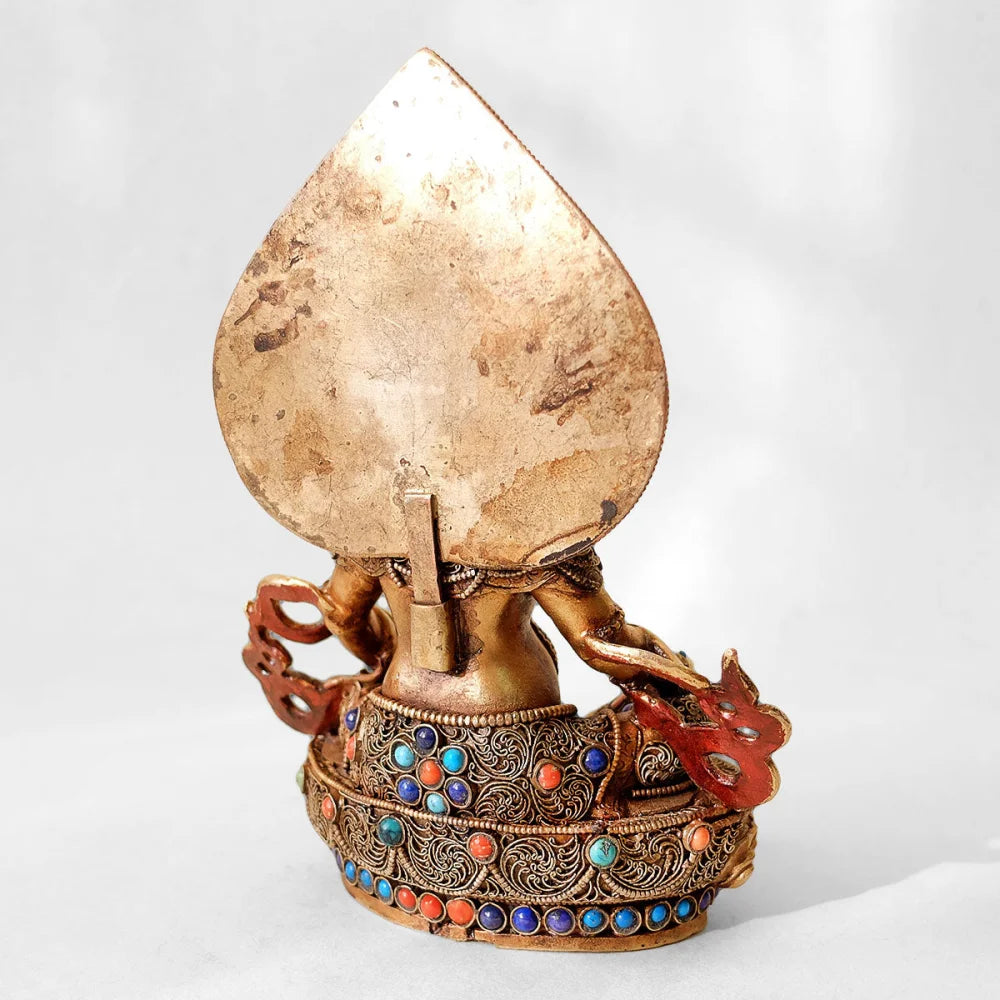
The robe and pedestal are adorned with filigree. Fine wires are bent into spiral forms, filled with small arched elements, and assembled into continuous patterns. Colored stones accentuate the ornament. The statue is worked all around and is intended for freestanding presentation.
The artistic refinement of the surface lends the traditional iconographic form a dense and balanced overall presence.
Jambhala
Statue made of copper, lost-wax cast, decorated with fine filigree, gold- and silver-plated, set with turquoise, coral, and lapis lazuli. The figure is patinated. The face is set in gold. Handcrafted in Nepal.
- Height: 6.5" / 16.7 cm
- Width: 4.9" / 12.4 cm
- Depth: 3.1" / 7.9 cm
- Weight: 806 g
NOTE
The facial painting is a cold gold application and is water-soluble.