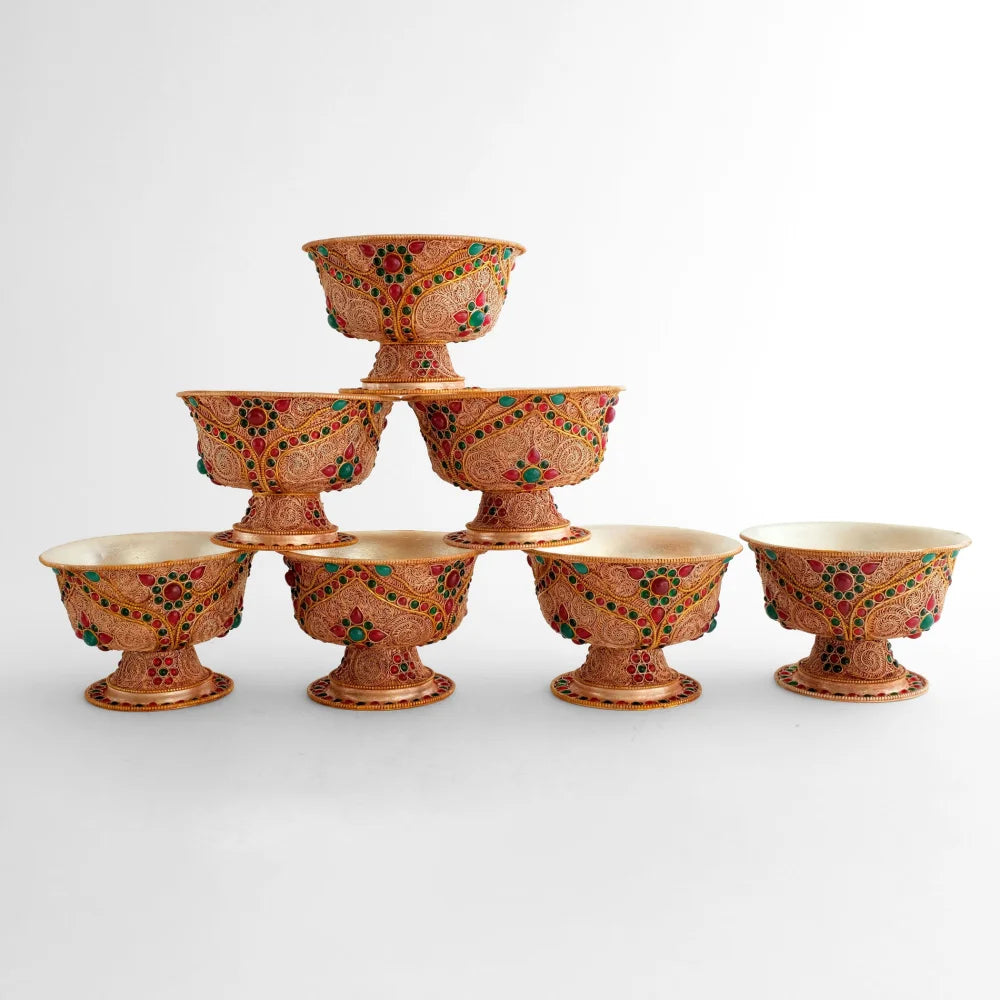
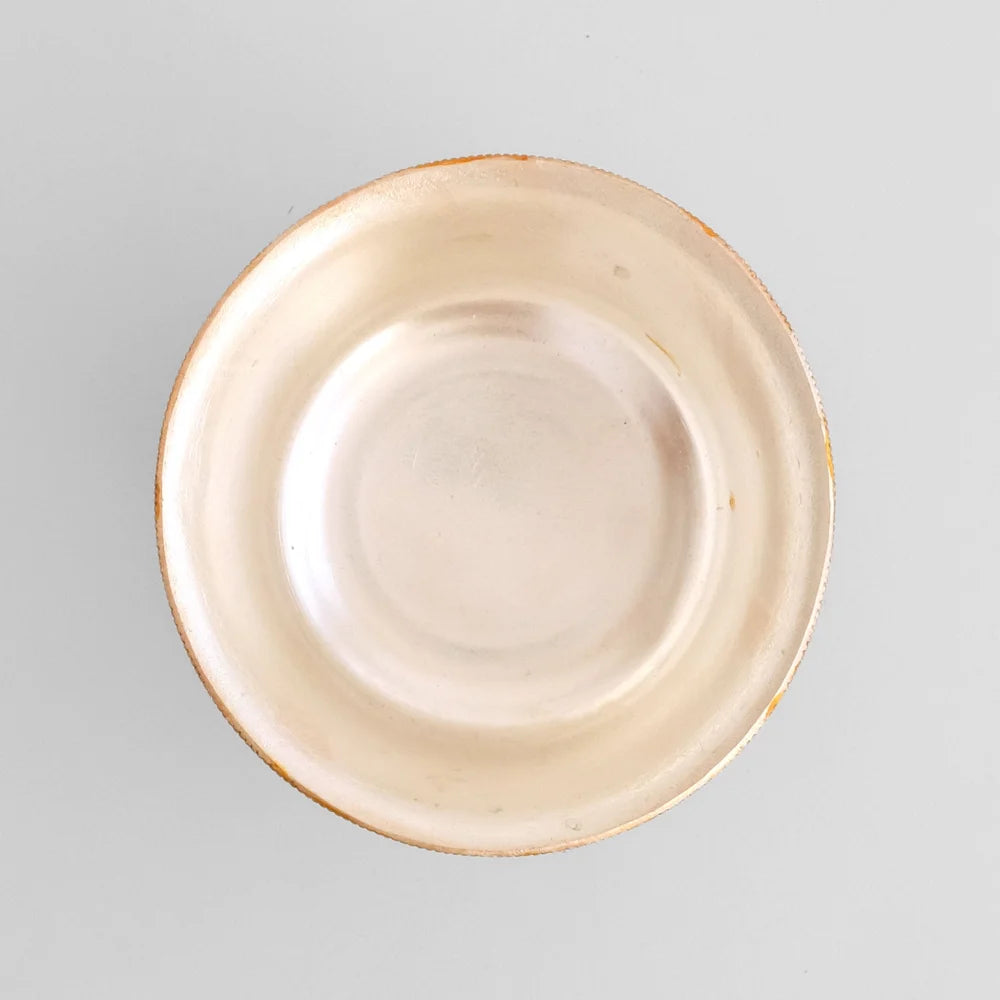
These seven offering bowls, ting, form part of the established furnishings of Buddhist altars in the Himalayan region. They are arranged as a complete set in monastic settings as well as in household shrines.
Each of the seven bowls represents a symbolic offering to an honored guest. The sequence comprises water for drinking, water for washing the feet, flowers, incense, a lamp as a symbol of wisdom, scented water, and food. Taken together, the bowls refer to a transmitted order of ritual offerings within Buddhist practice.
In Tibetan, these offerings are known as chhoyon, syabsel, metog, dugpo, marmey, dichhyap, and syalsey.
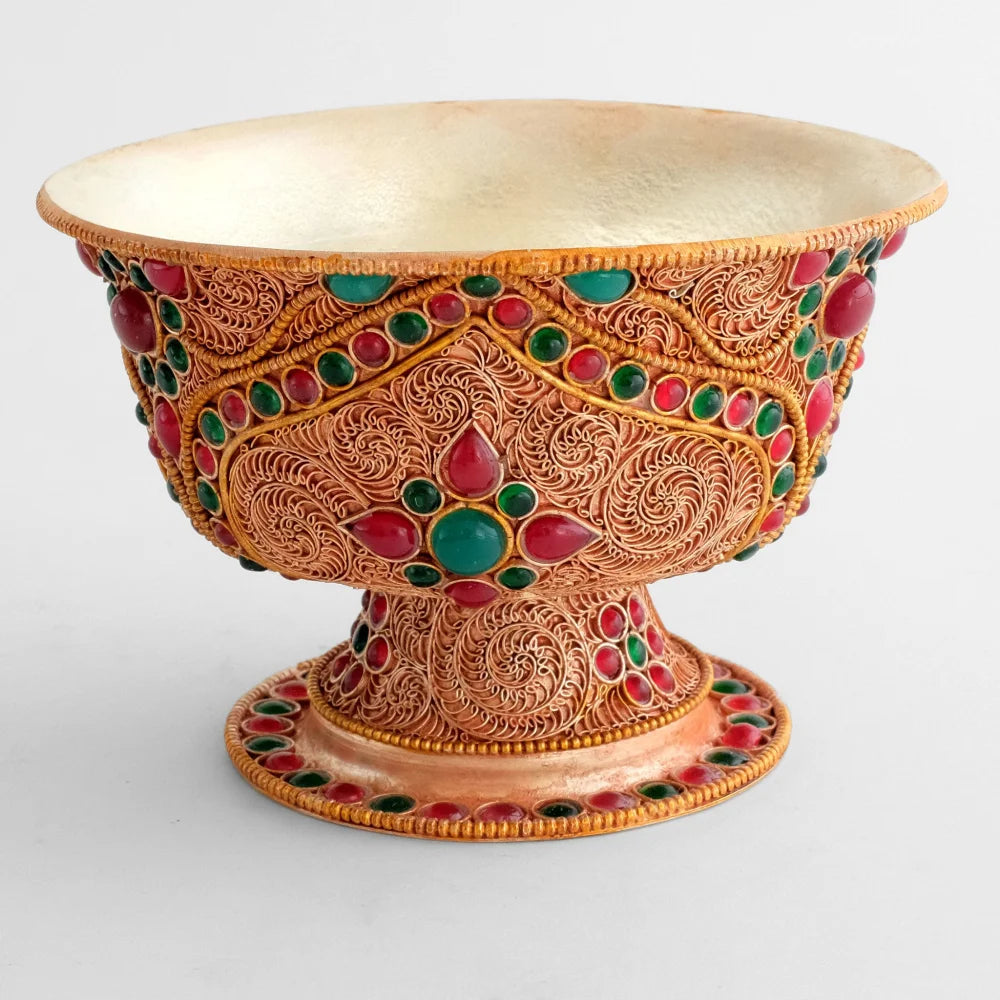
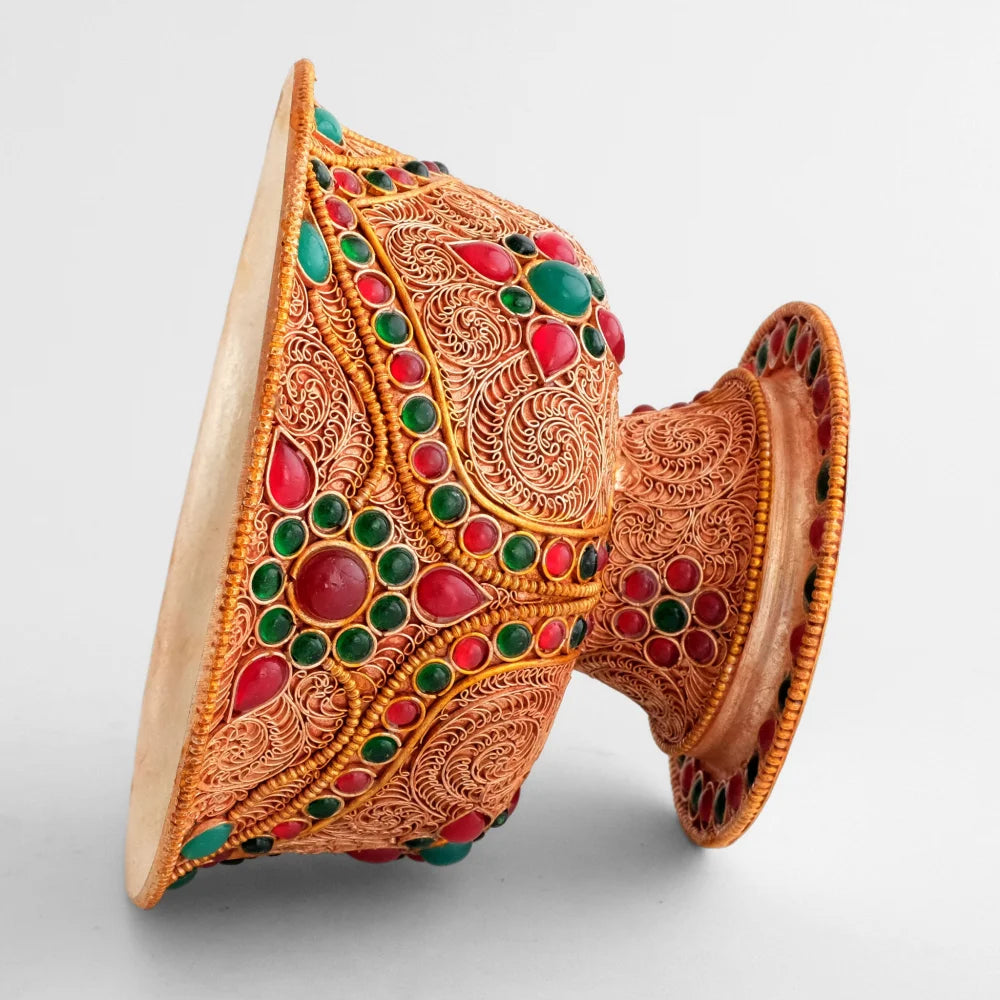
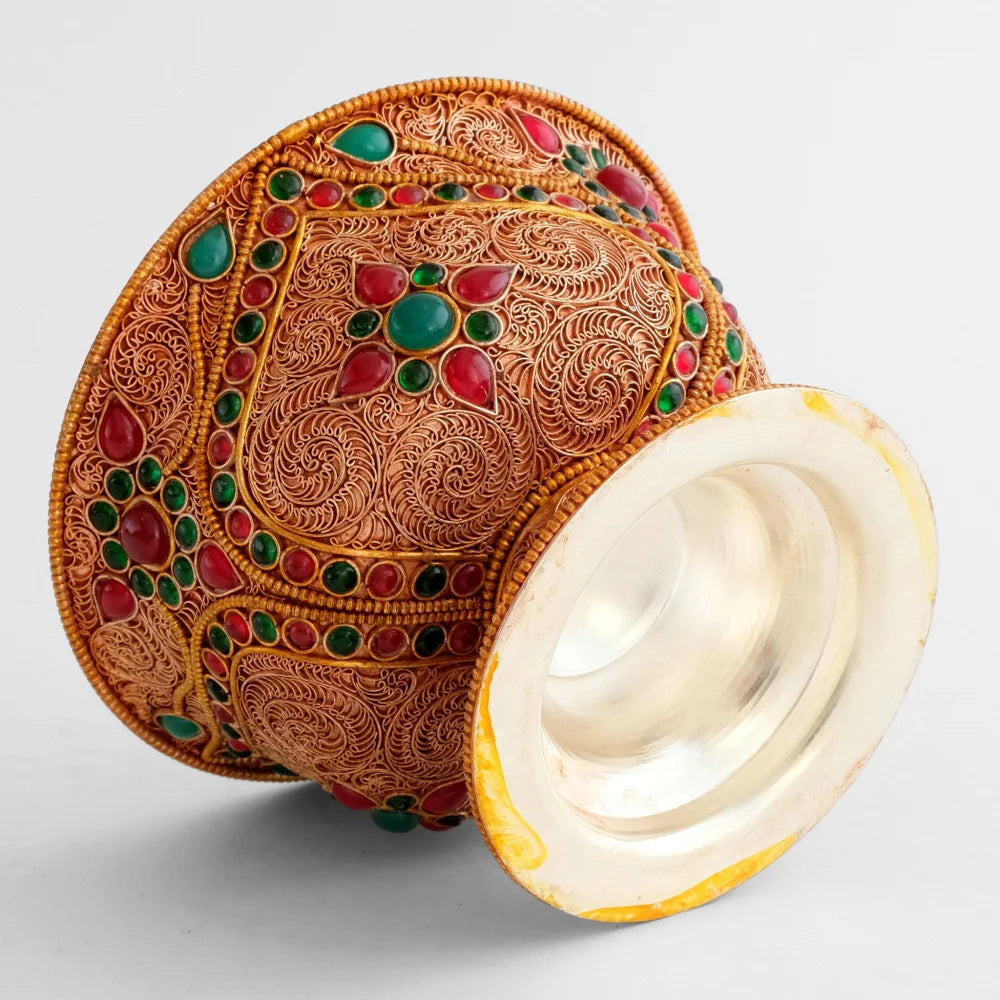
The bowls are made of copper and formed with a short pedestal foot. The vessel walls and foot are decorated using filigree technique. Fine wires are shaped into spiral forms, filled with small arched elements, and assembled into continuous ornamental patterns. Colored stones are set into the filigree structure, forming floral motifs. The bowls are worked all around and executed consistently on all sides.
The set of seven offering bowls combines a clearly defined ritual function with ornamental articulation in filigree technique and reflects the craft tradition of metal ritual vessels from the Himalayan region.
Seven offering bowls
Made of copper, decorated with filigree embellishments, silver-plated and gold-plated, set with colored stones. Finished with red vermilion powder. Handcrafted in Nepal.
- Heights: 3.5" / 8.5 cm (each)
- Diameters: 5" / 13 cm (each)
- Weight: 2.022 g (7 pieces)