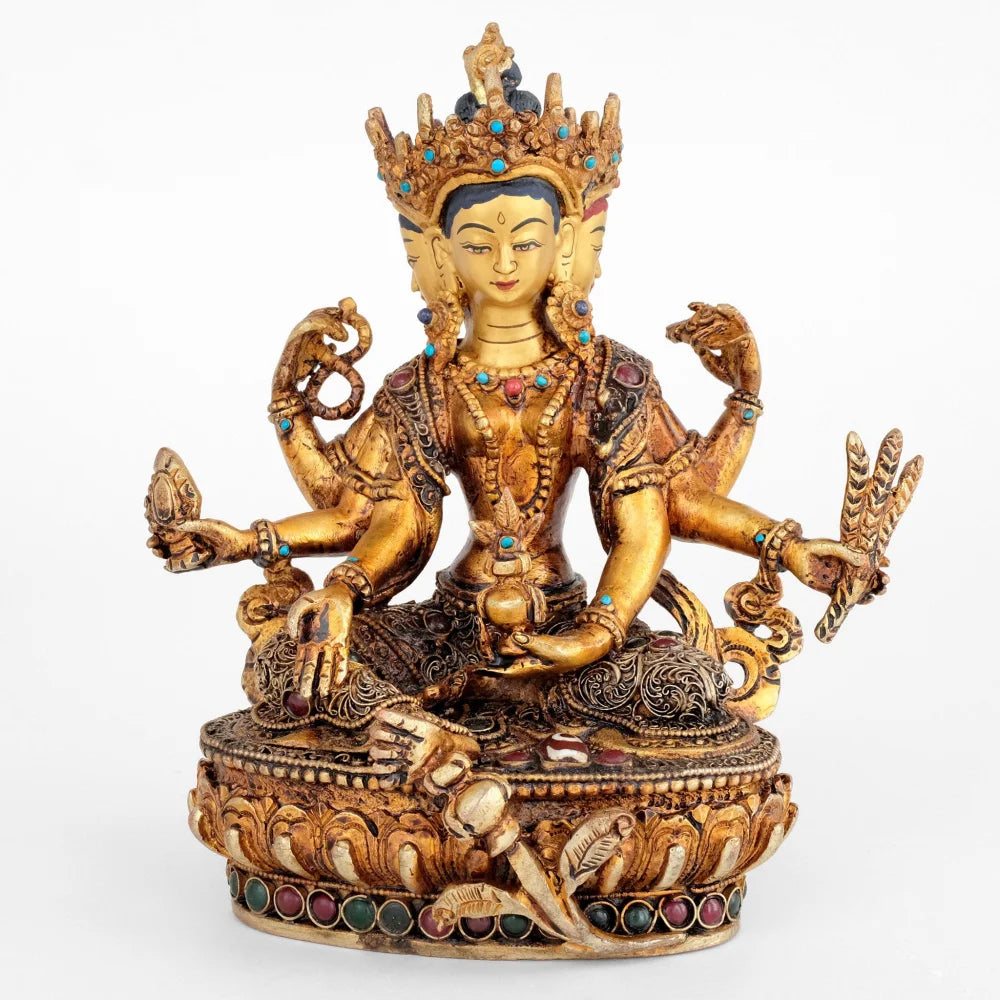
Vasudhara belongs to the female figures of Vajrayana Buddhism and is known as a deity associated with prosperity, fertility, and abundance.
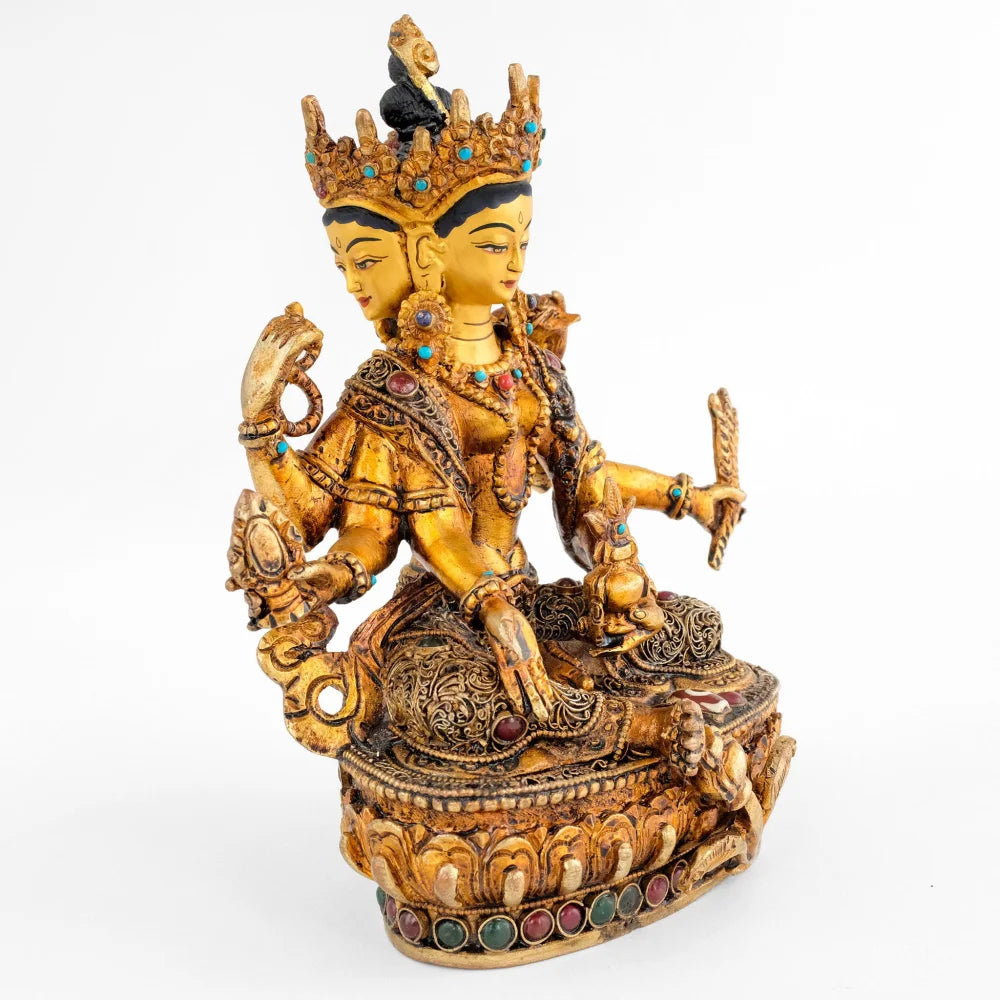
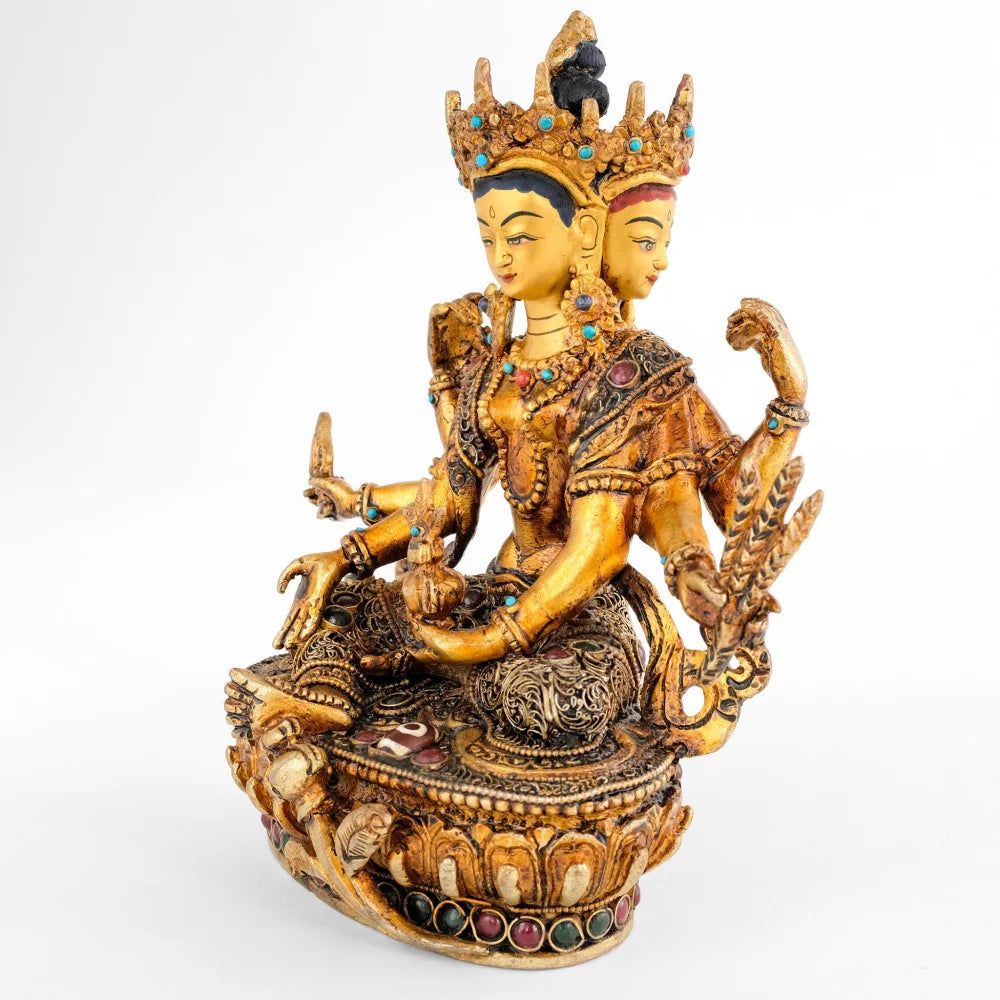
Vasudhara is depicted in lalita asana. The left leg is bent, while the right leg is extended forward; the right foot rests on a vase.
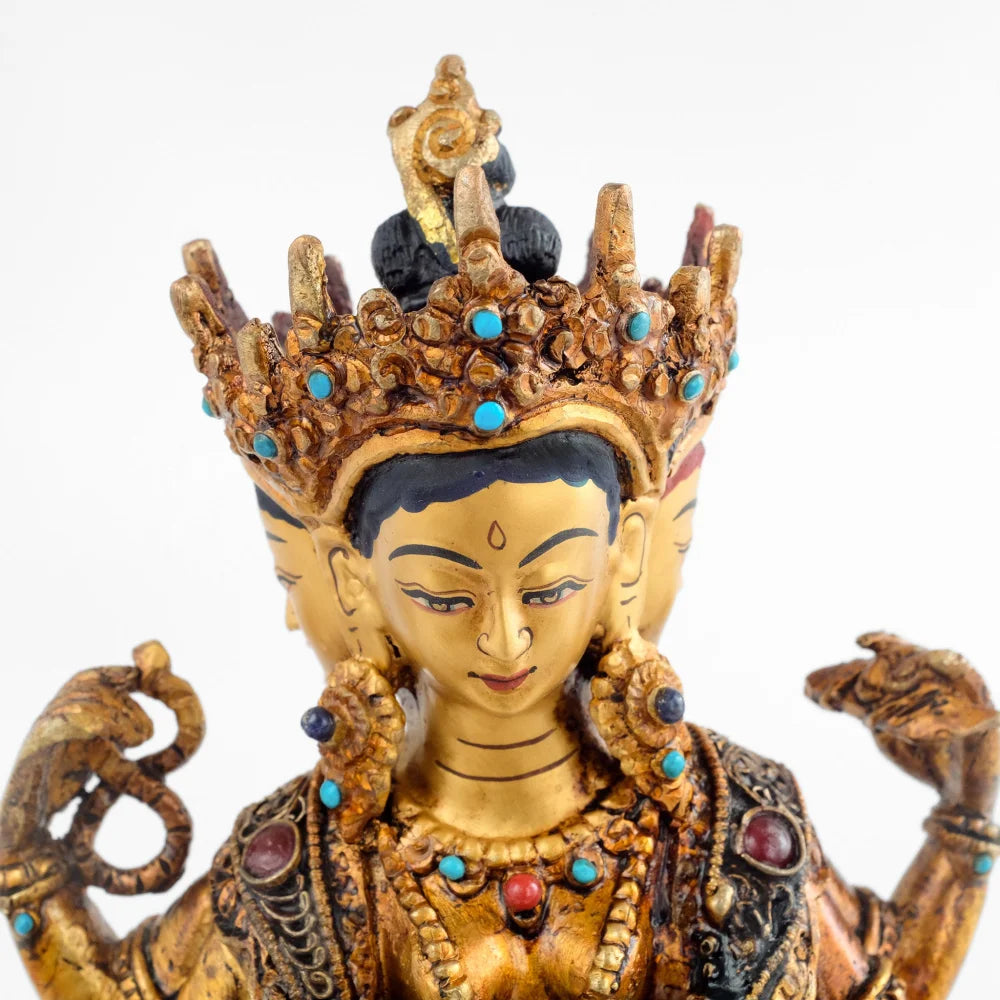
She appears with three faces, each bearing a central forehead mark. Her six arms hold characteristic attributes: an ear of grain, a jewel vase, a book, a mirror, and a rosary; one further hand displays the gesture of granting, varada mudra. Vasudhara wears the crown and full adornment of a bodhisattva.
The combination of attributes refers to aspects of abundance, continuity, and insight. The ear of grain stands for nourishment and yield, the jewel vase for abundance, and the book for wisdom. Mirror and rosary complement the depiction with contemplative and ordering aspects.
Pedestal and garment are worked with filigree. Fine wires are formed into spirals, filled with small arched elements and assembled into patterns. Colored stones set accents within the filigree and form floral motifs. The statue is also worked on the reverse and is intended for freestanding display.
The depiction follows a clearly defined iconographic tradition of the Newar Buddhist context of the Kathmandu Valley.
Vasudhara
Statue from copper, traditional lost-wax cast, decorated with fine filigree , silver- and gold-plated, set with colored stones. The figure is patinated. Faces are gold-plated. Handcrafted in Nepal.
- Height: 17 cm
- Width: 15 cm
- Depth: 10 cm
- Weight: 1,146 g
NOTE
The facial paint is a cold-gold application and water-soluble, requiring special care to preserve the beauty of the figure.