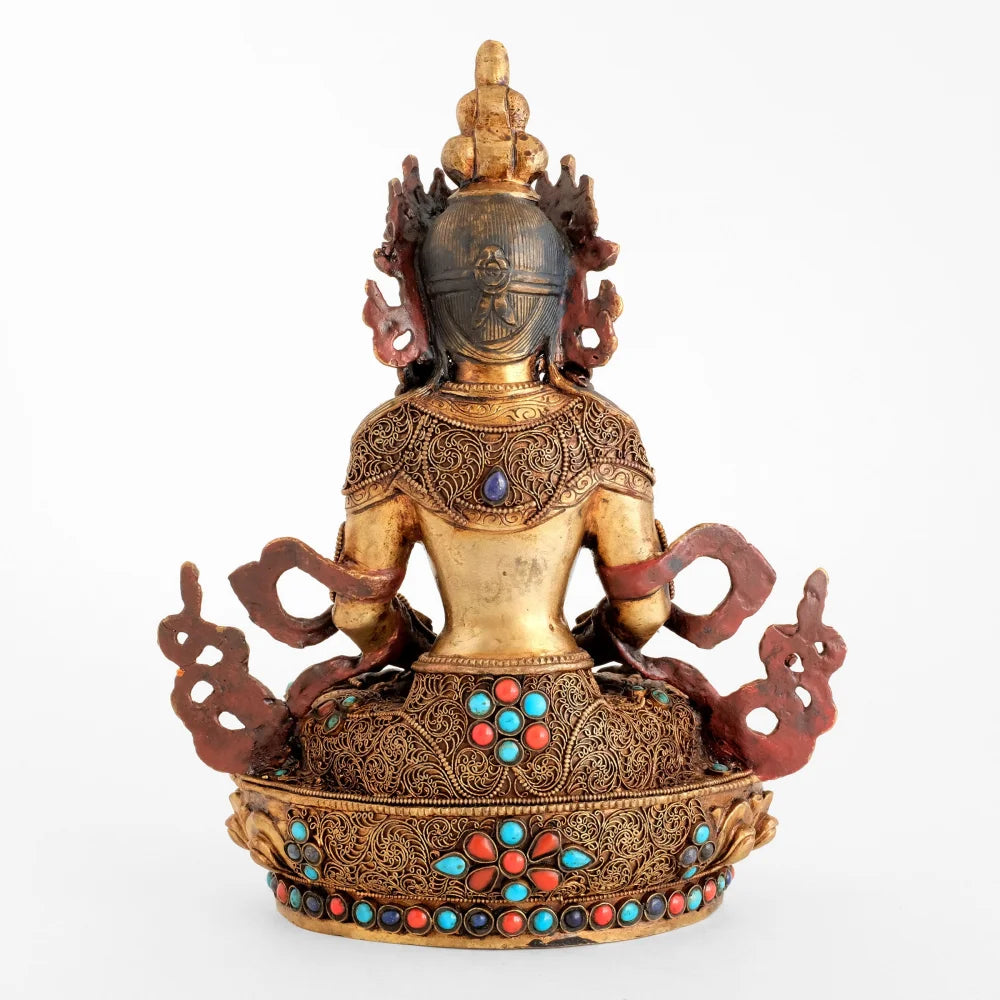
Amitayus is a central figure in the iconography of the Vajrayana and is regarded as an aspect of Amitabha.
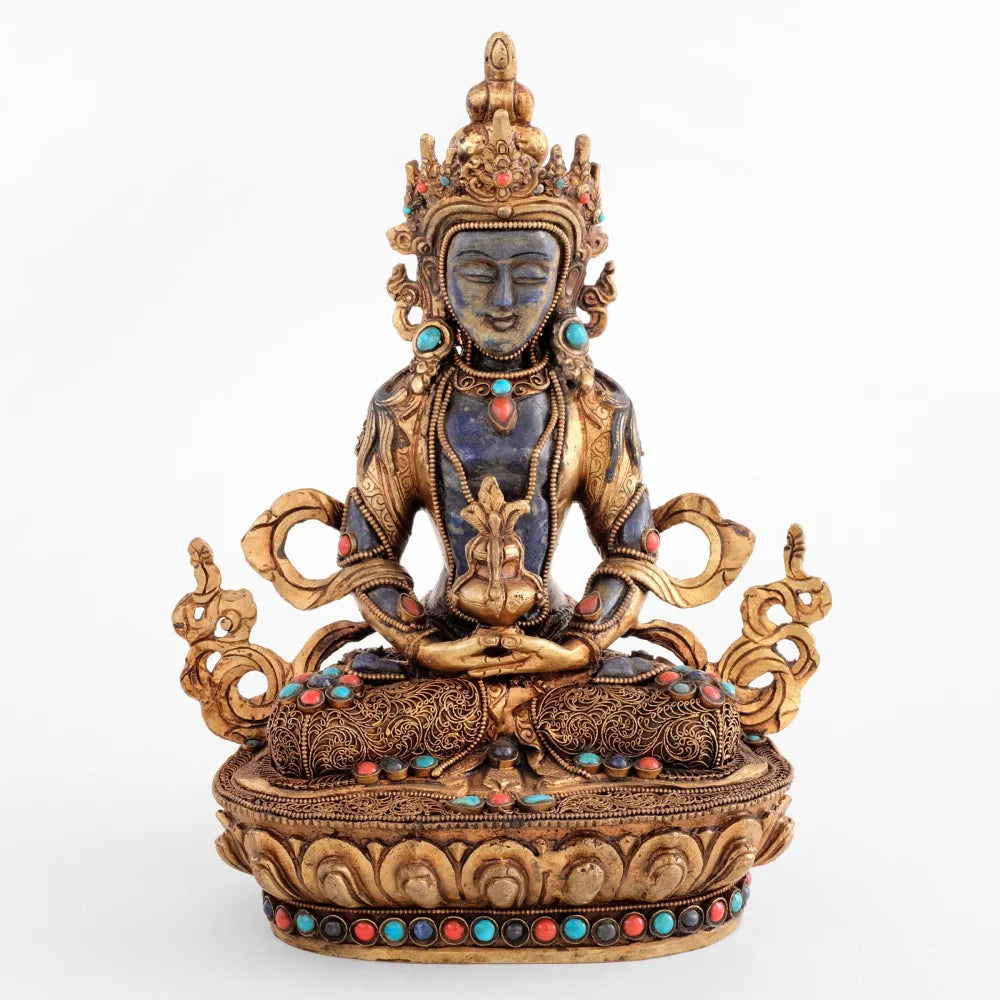
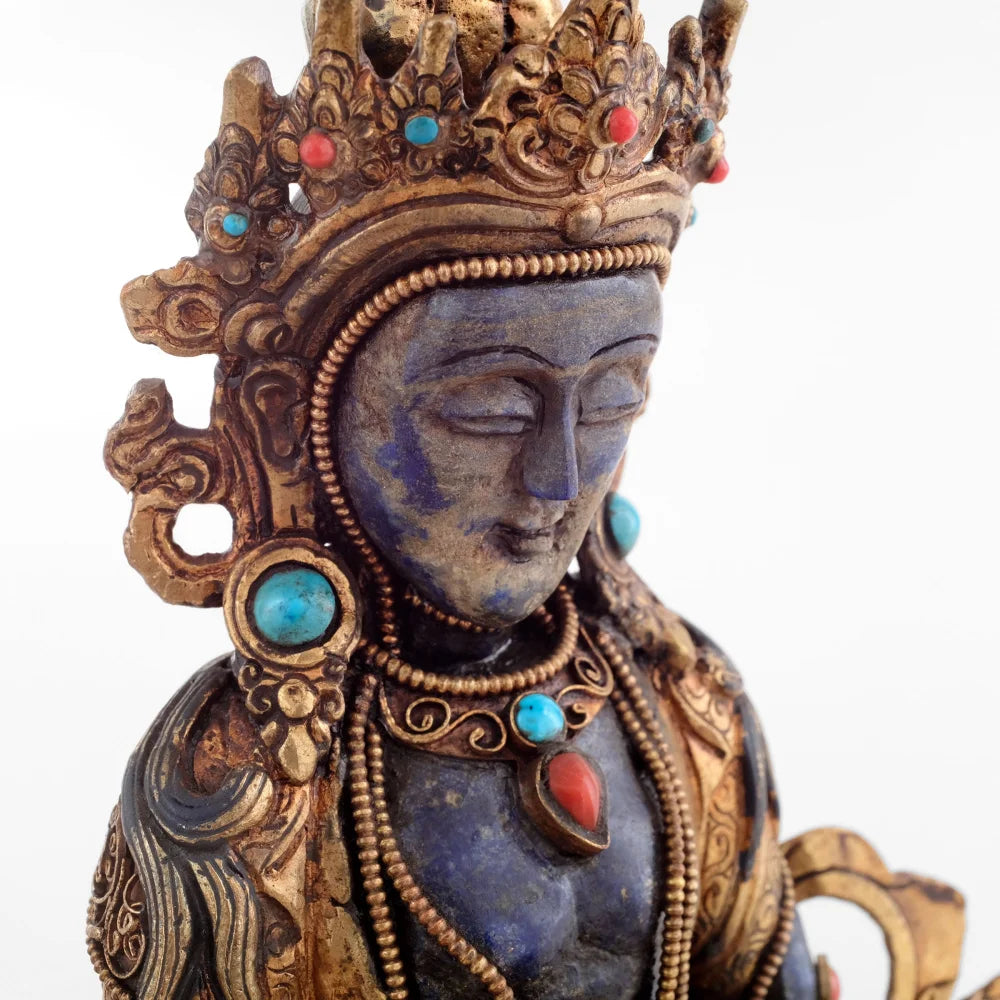
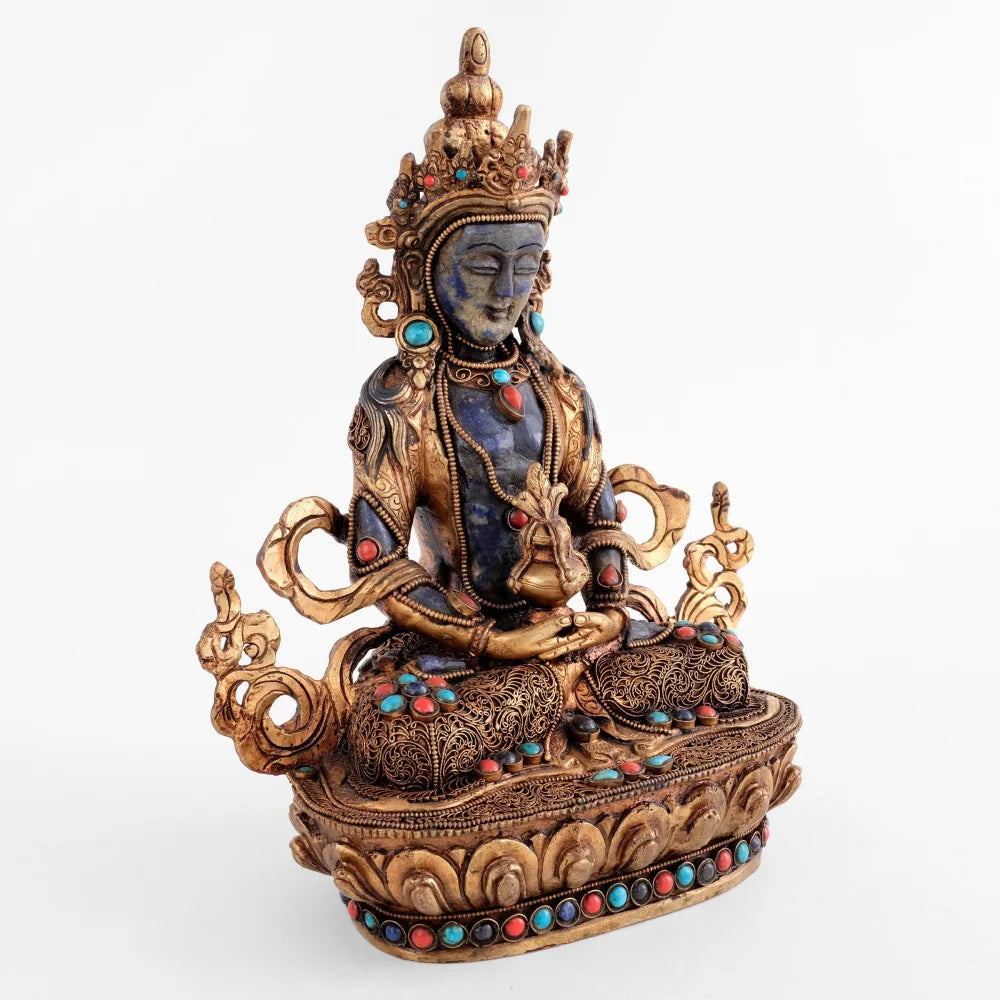
The figure depicts Amitayus seated in full lotus posture, padma asana, on a lotus pedestal. The hands hold the vase of long life in a meditative position. Posture and orientation are calm and frontal, with a composed and balanced facial expression. A drop-shaped aureole rises behind the head. Amitayus wears the crown and full ornaments of a Bodhisattva.
Face, body, arms, and feet are carved from lapislazuli. The natural inclusions of the stone are visible and lend the surface a lively structure. The deep blue of the lapislazuli stands in balanced contrast to the gilded copper setting.
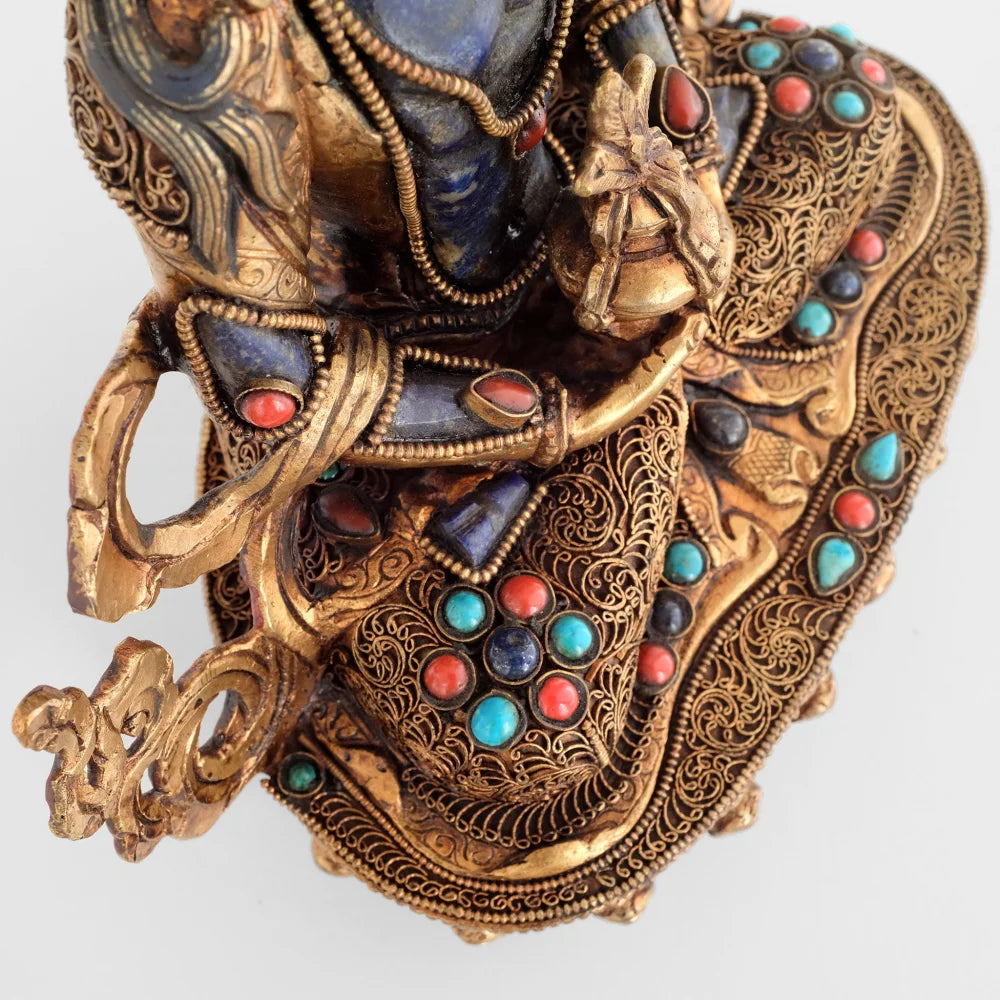
The robe and the surface of the lotus pedestal are executed in filigree. Fine wires are shaped into spiral forms, filled with small arched elements, and assembled into continuous patterns. Accents of turquoise, coral, and lapislazuli are set as floral motifs and articulate the ornamental surfaces. The decoration is executed all around; the reverse of the figure is also fully worked, allowing for freestanding presentation. Along the lower edge of the lotus pedestal runs a continuous band of set stones.
The statue combines artistic execution with skilled craftsmanship and follows the established iconography of Buddhist art.
Amitayus (Aparmita)
Statue from copper, traditional lost-wax cast, gold-plated, face and body carved from lapis lazuli, decorated with fine filigree, set with lapislazuli, coral and turquoise stones. The figure is patinated. Handcrafted in Nepal.
- Height: 8.5" / 21.5 cm
- Width: 7" / 18 cm
- Depth: 4" / 10 cm
- Weight: 1,476 g